The Place
Every place has an evolving story.
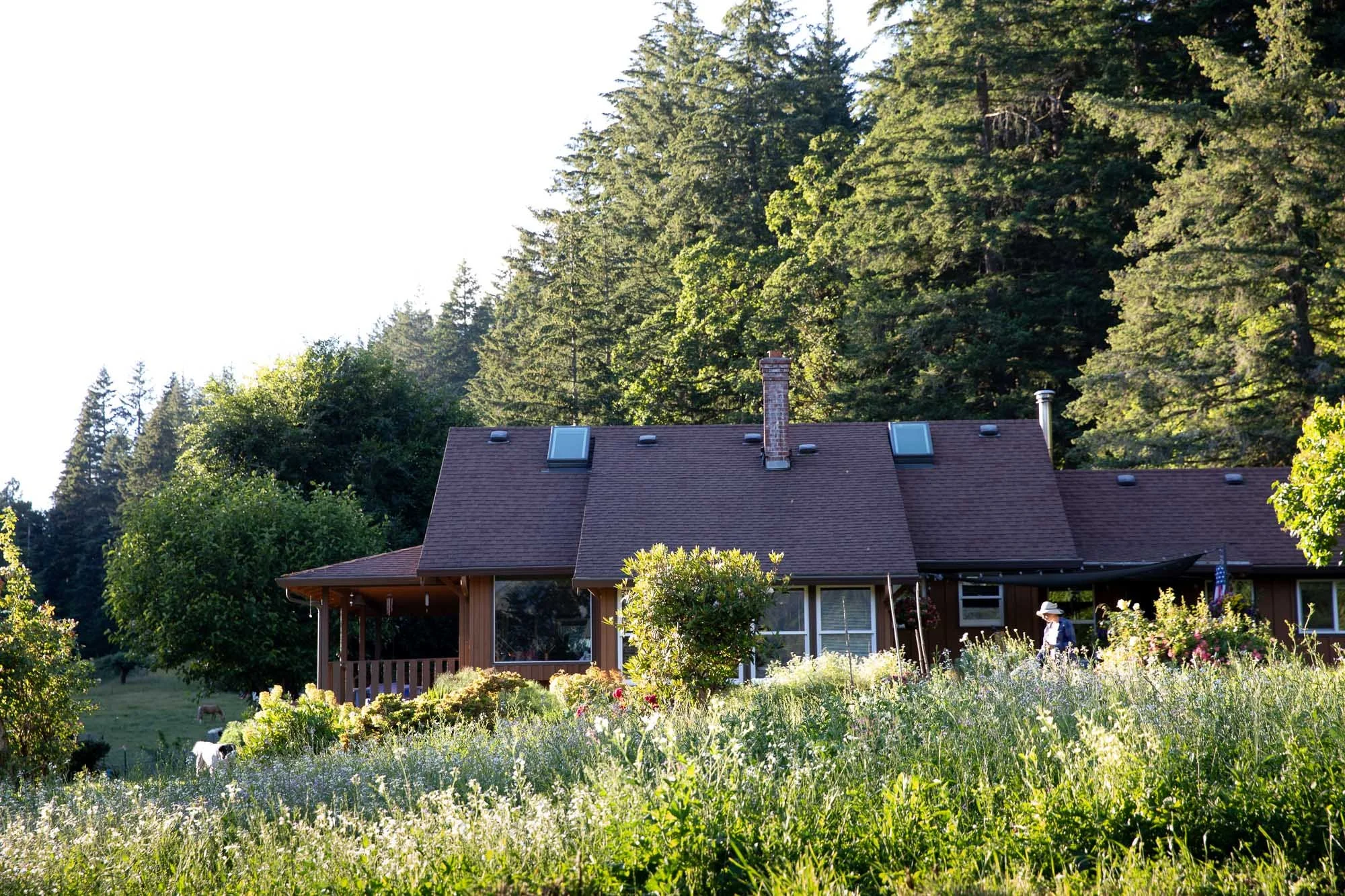
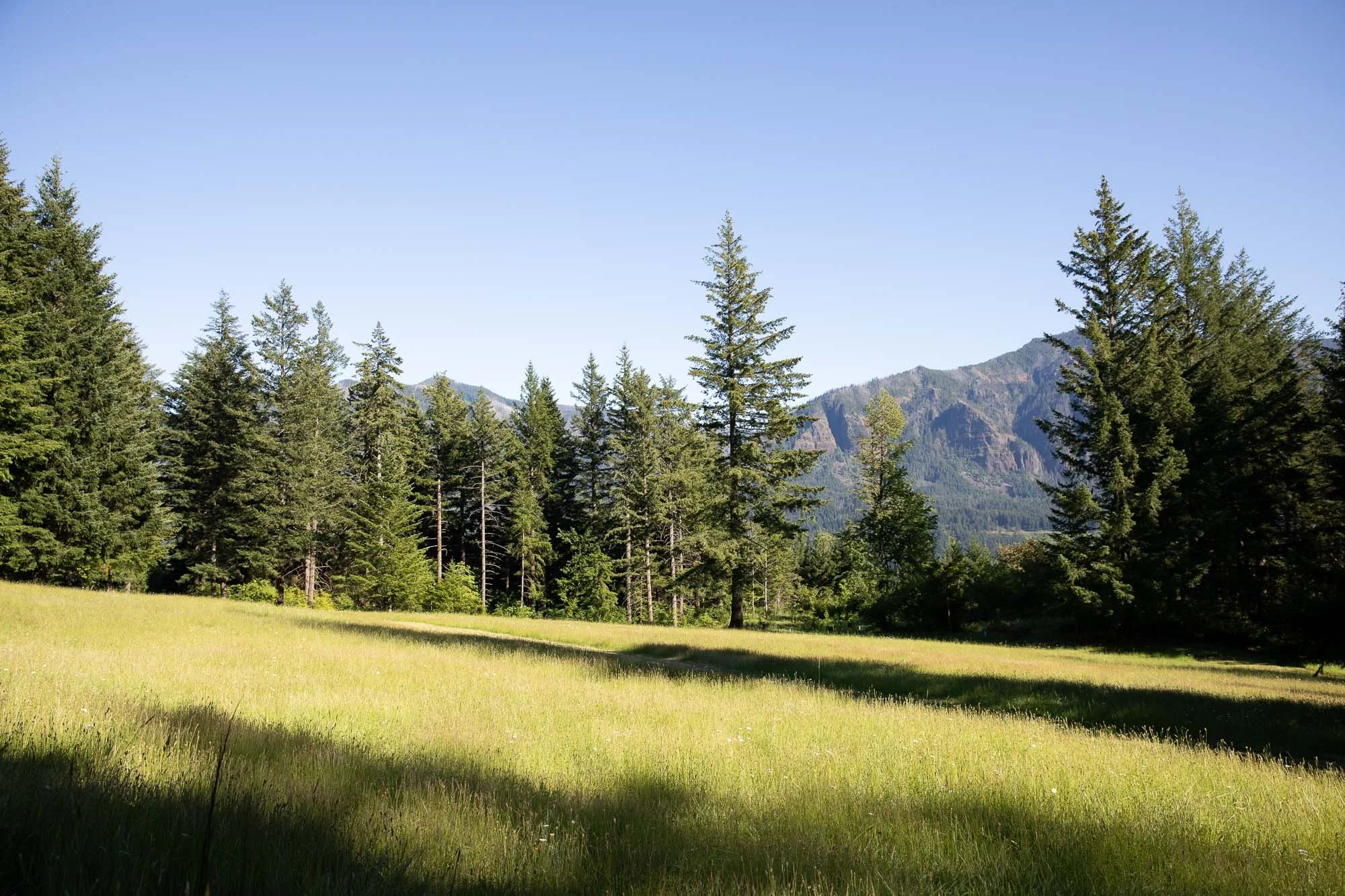
Tumbling down steep mountain hillsides toward the Columbia River, these particular eighty-five acres are ecologically diverse. They unfold across two distinct fertile meadow terraces surrounded by forests. Several small creeks flow through the land toward the river.
This place has long fostered life.
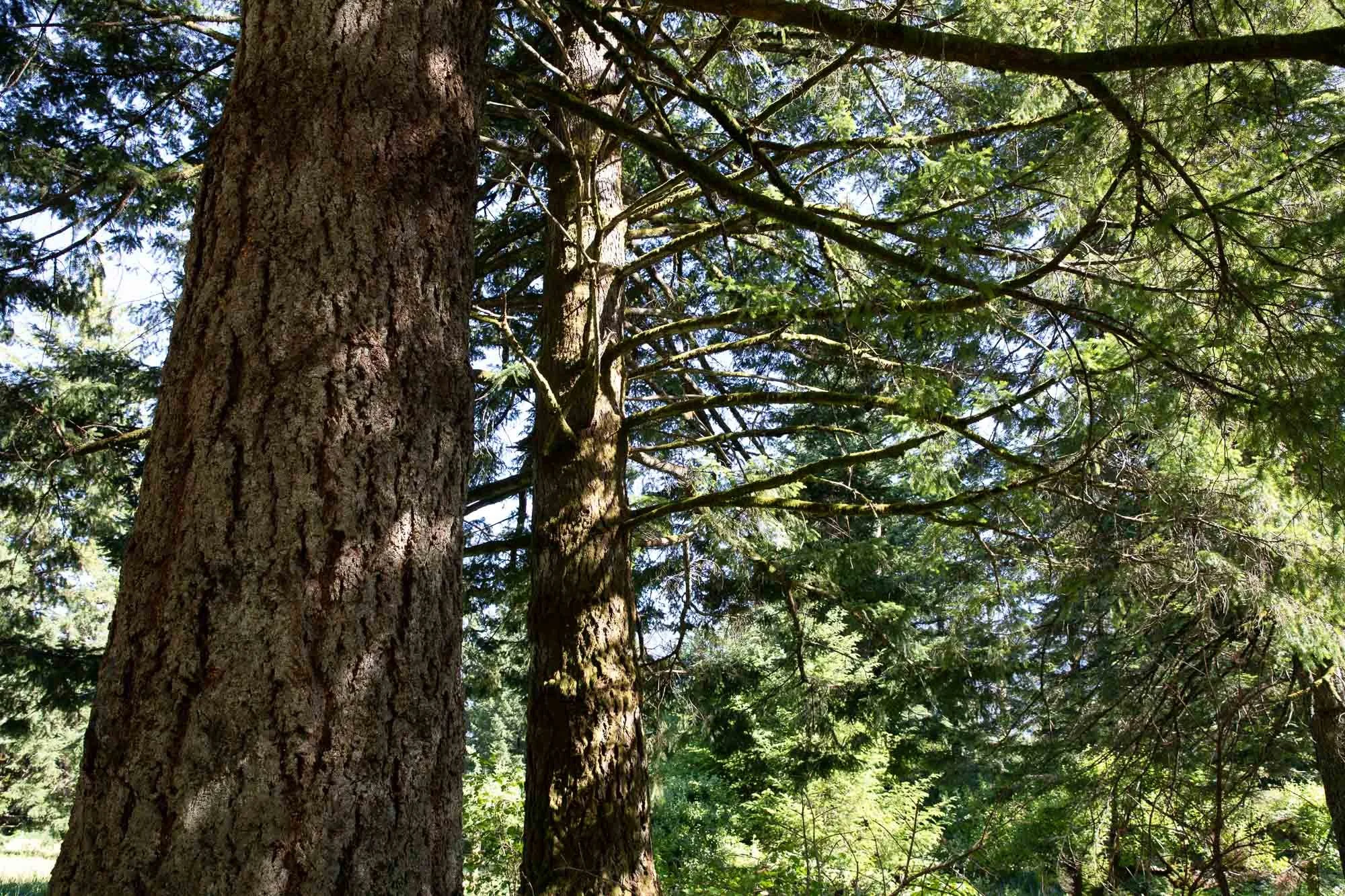
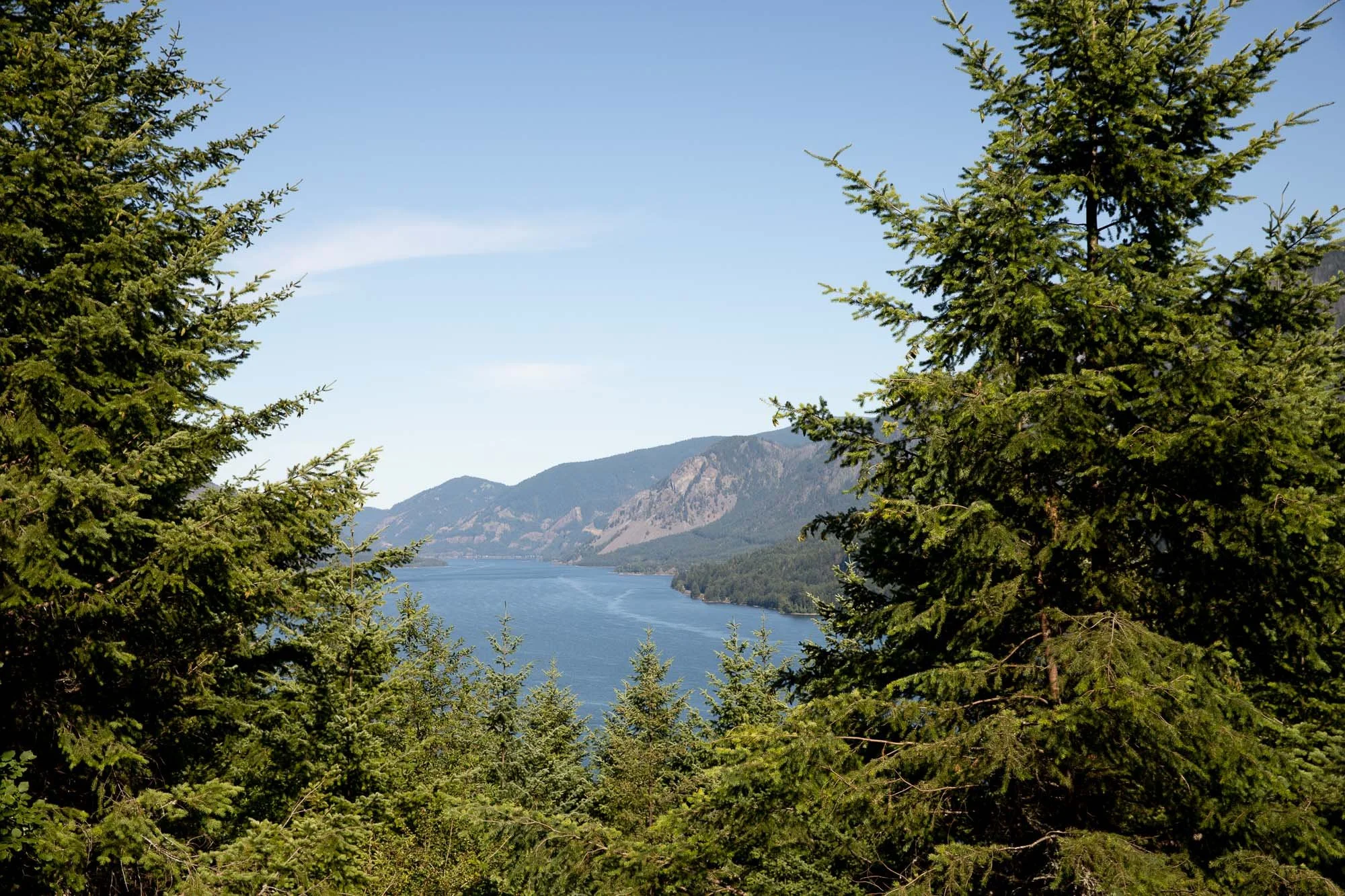
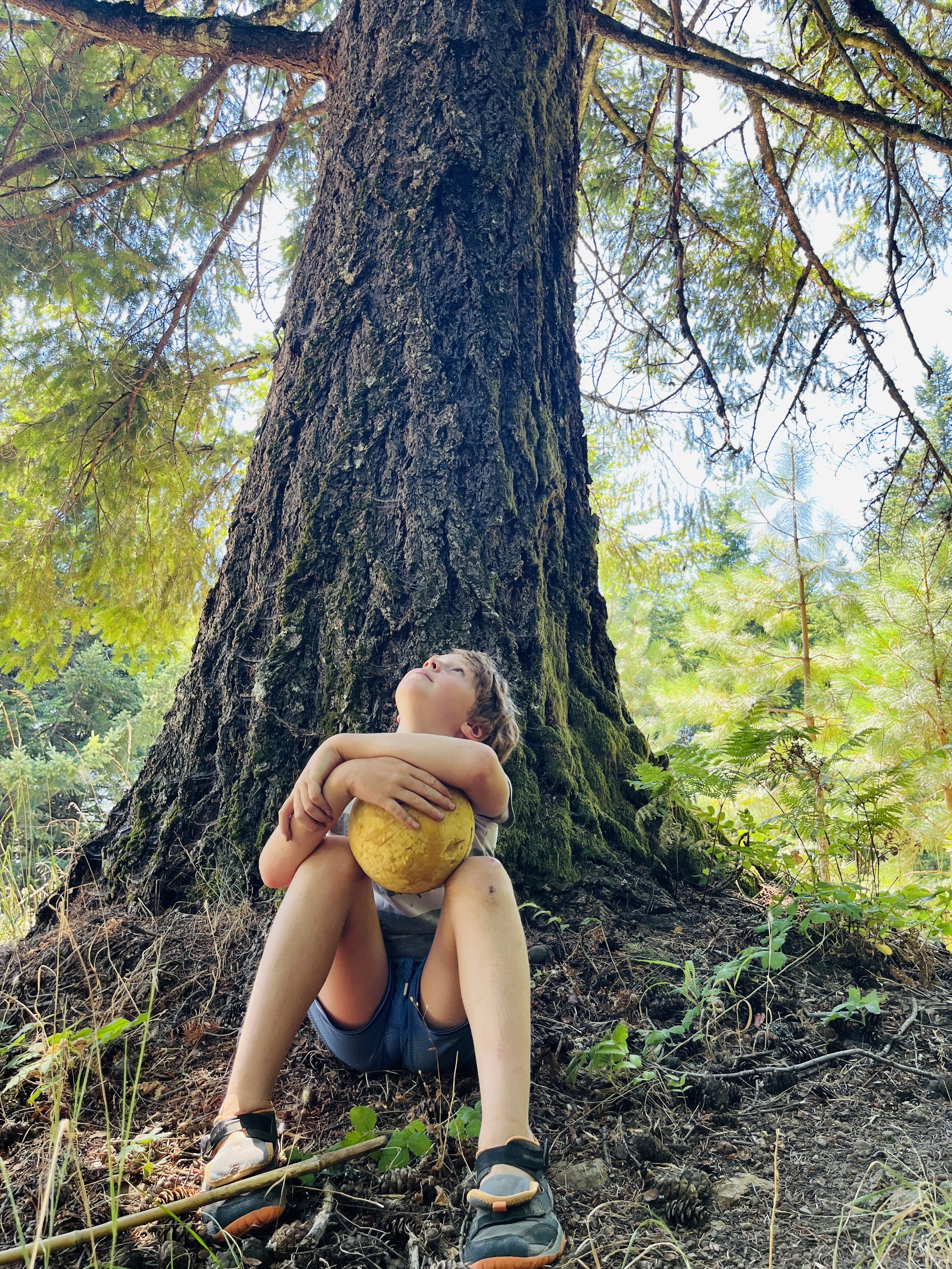
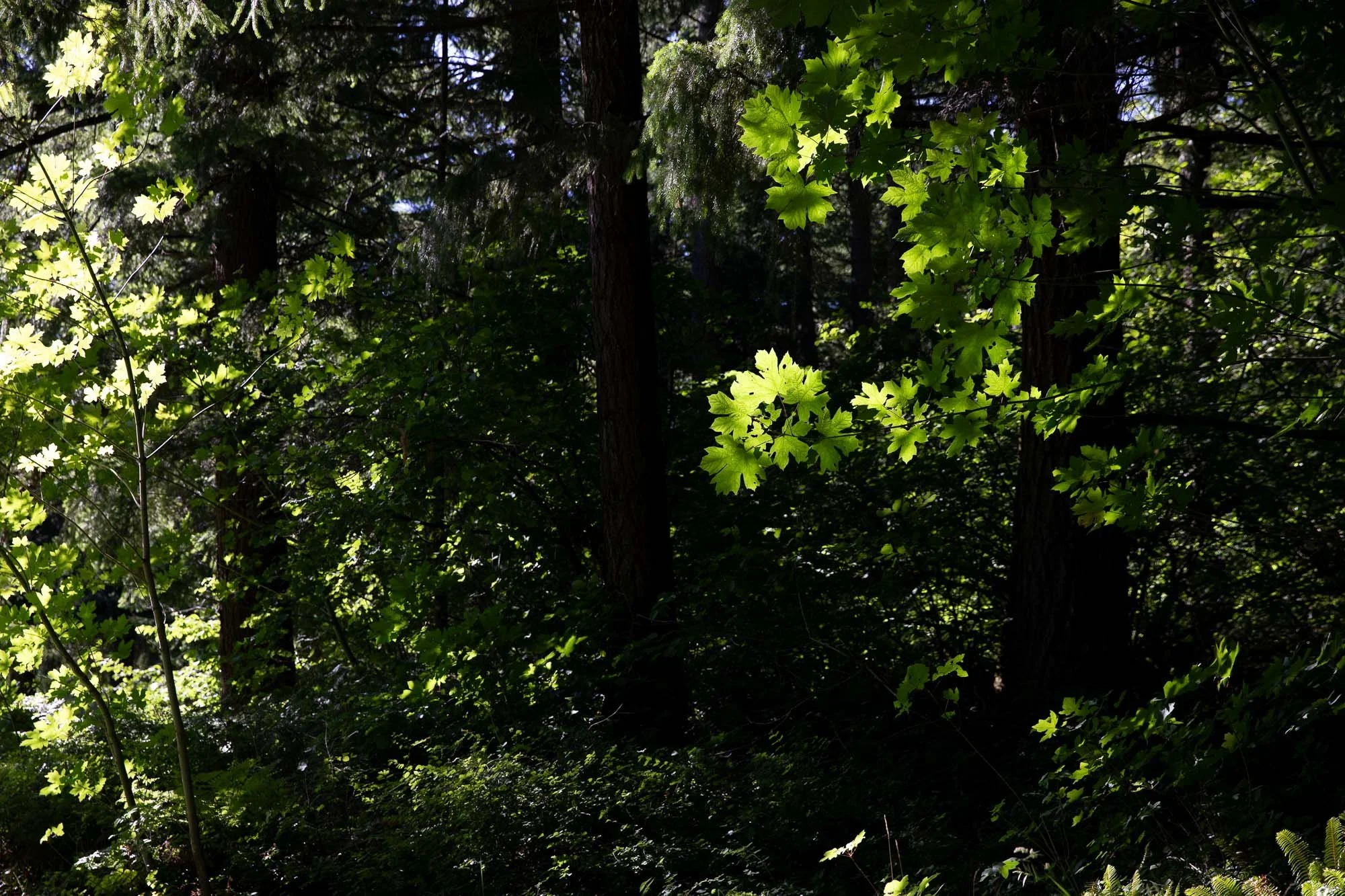
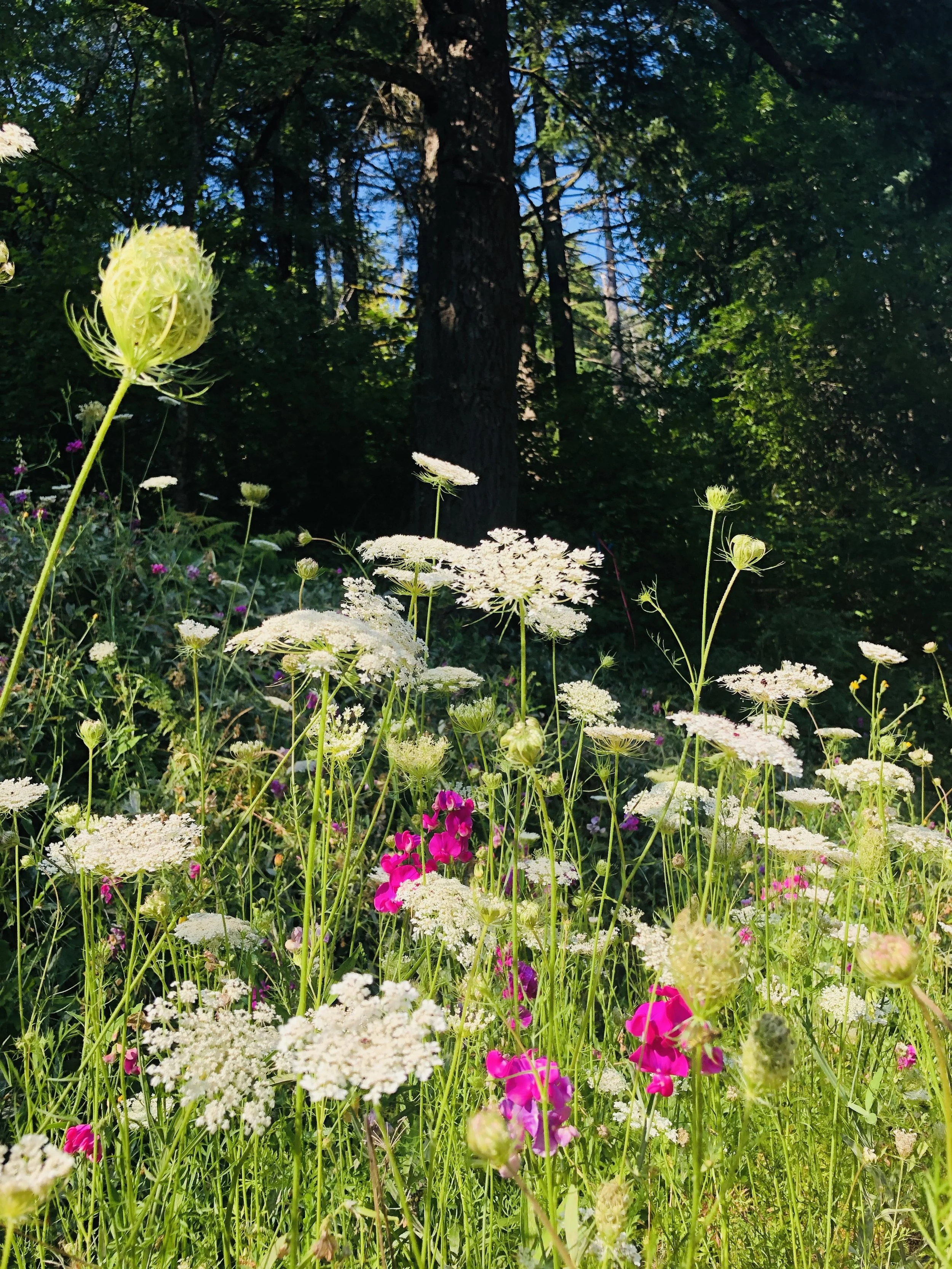
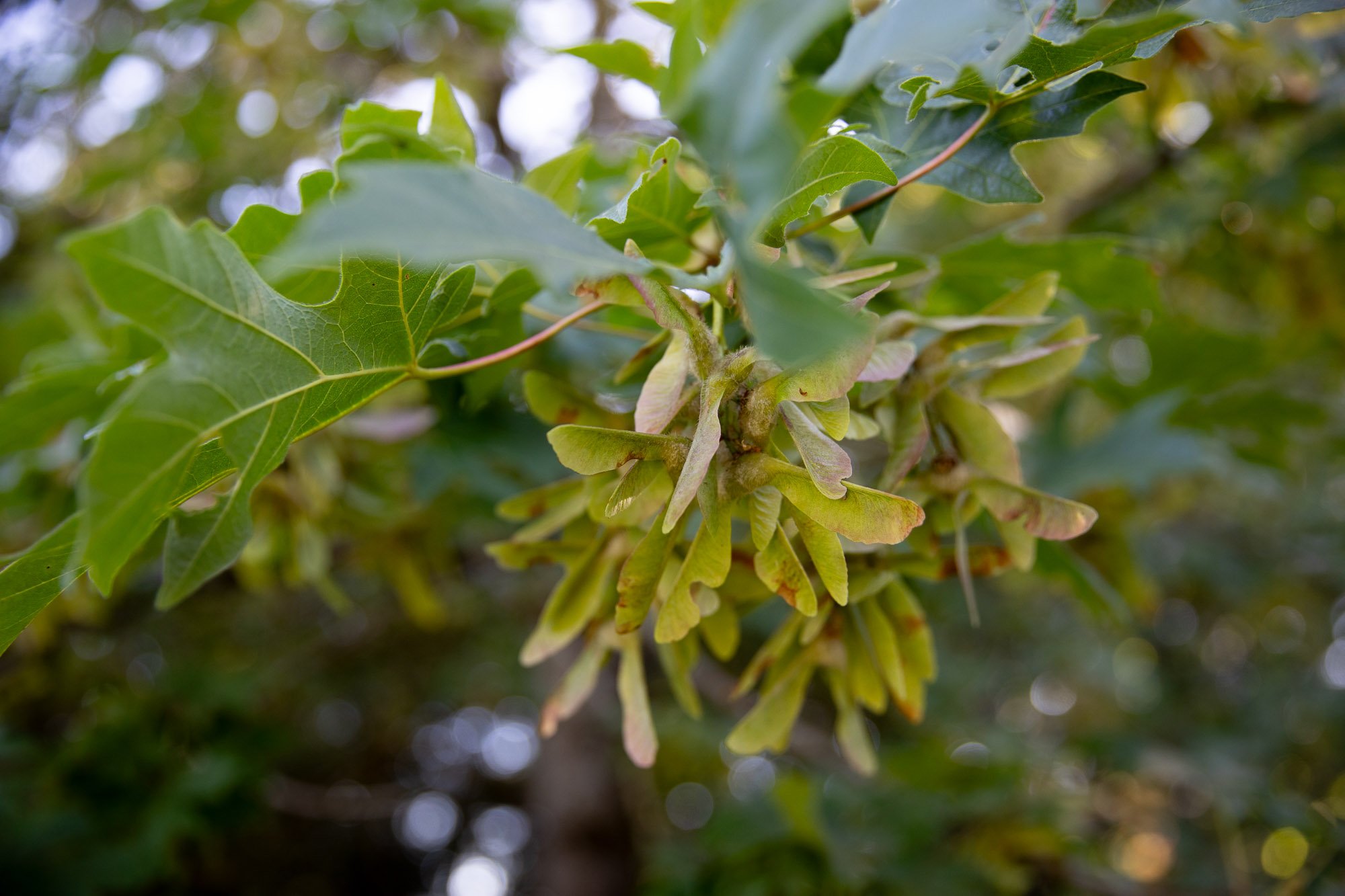
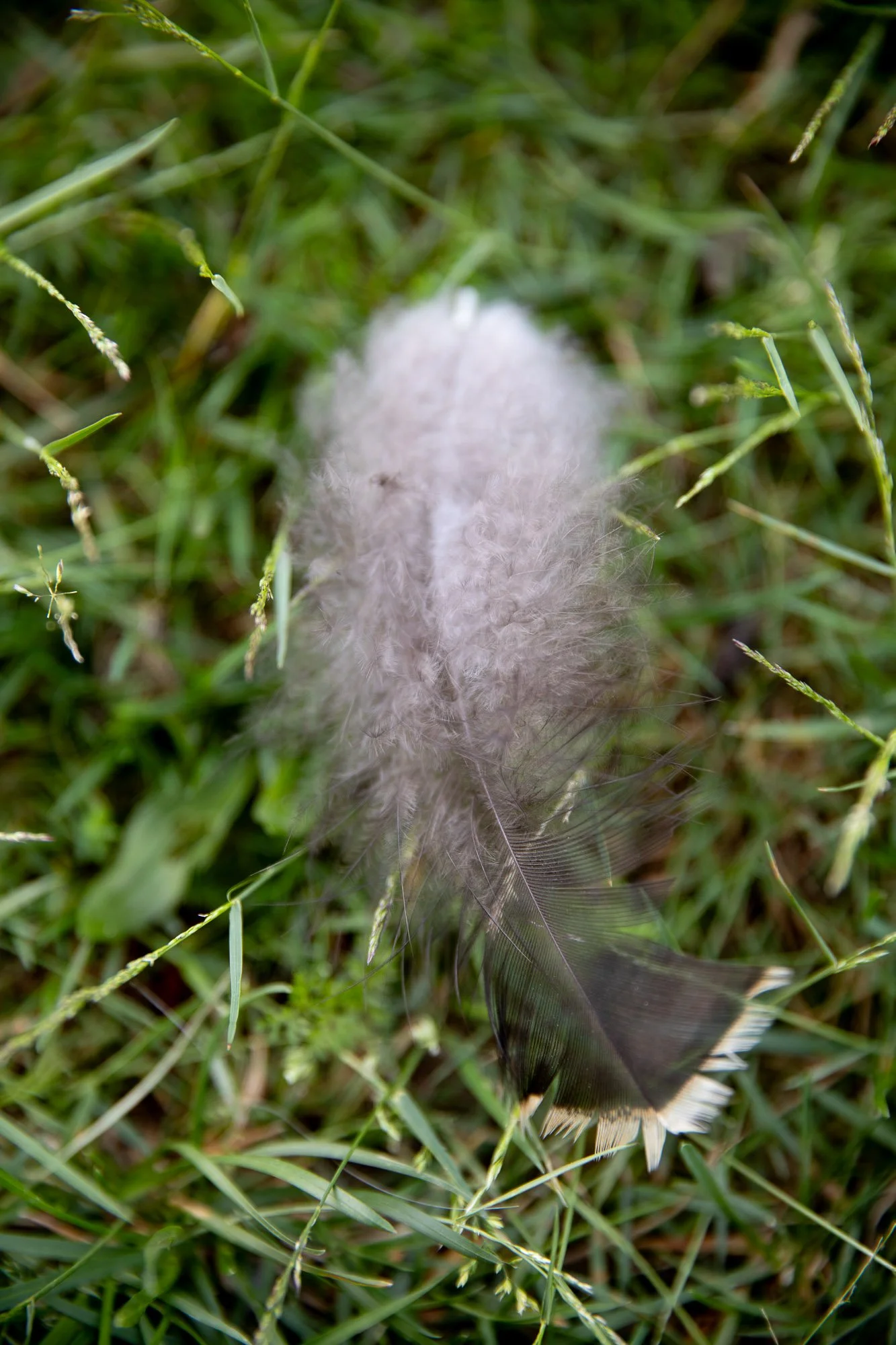
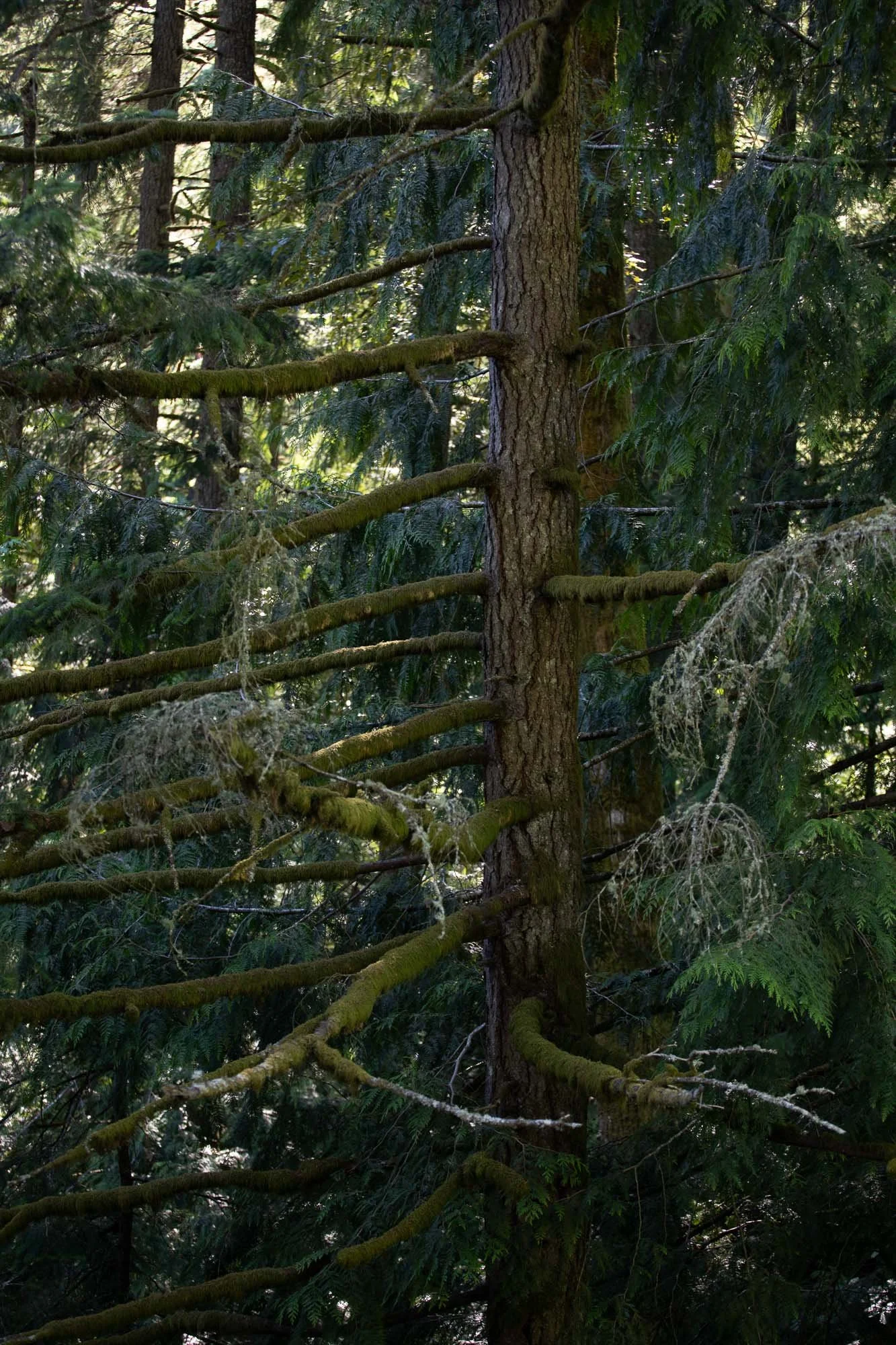
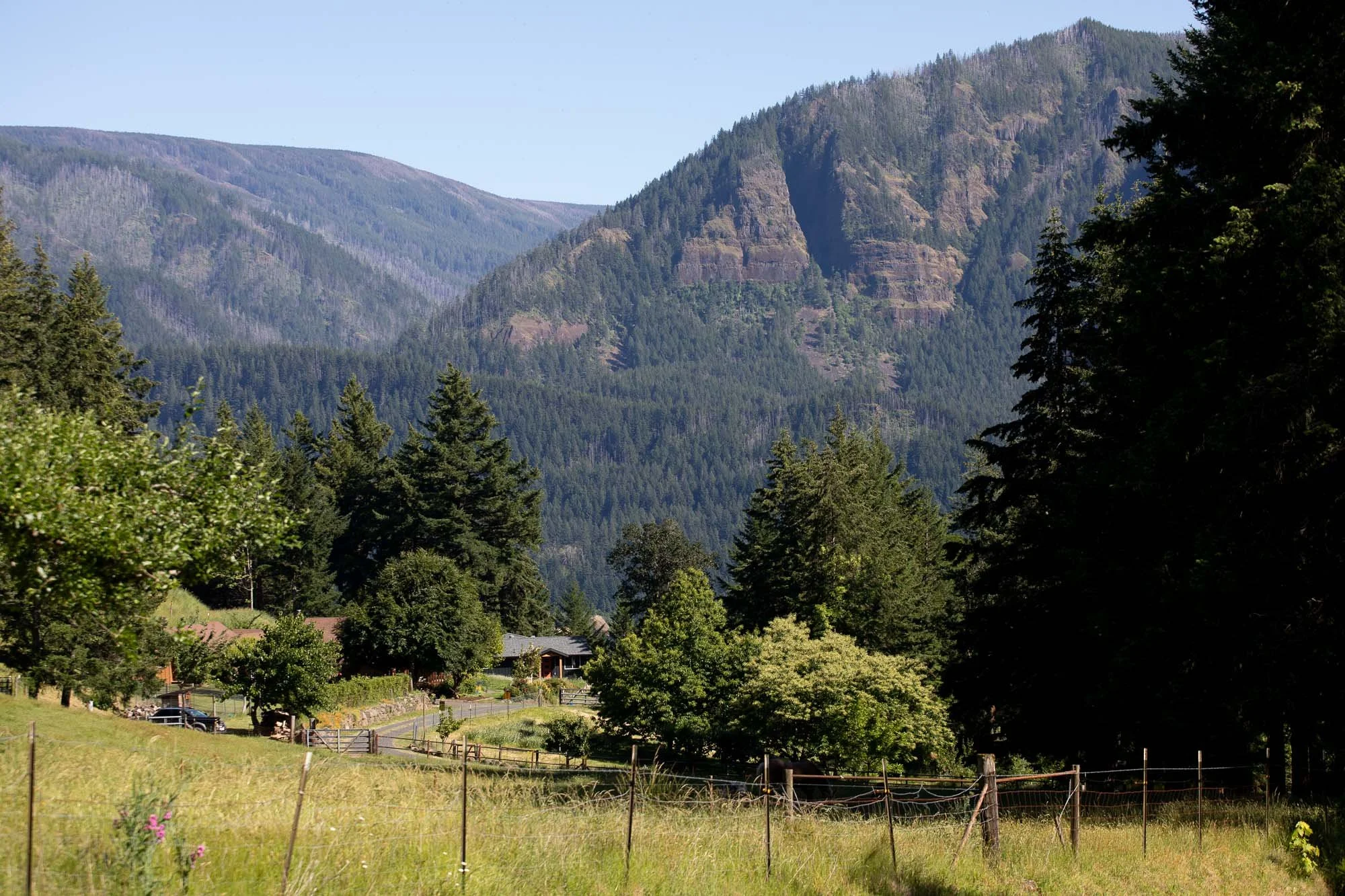
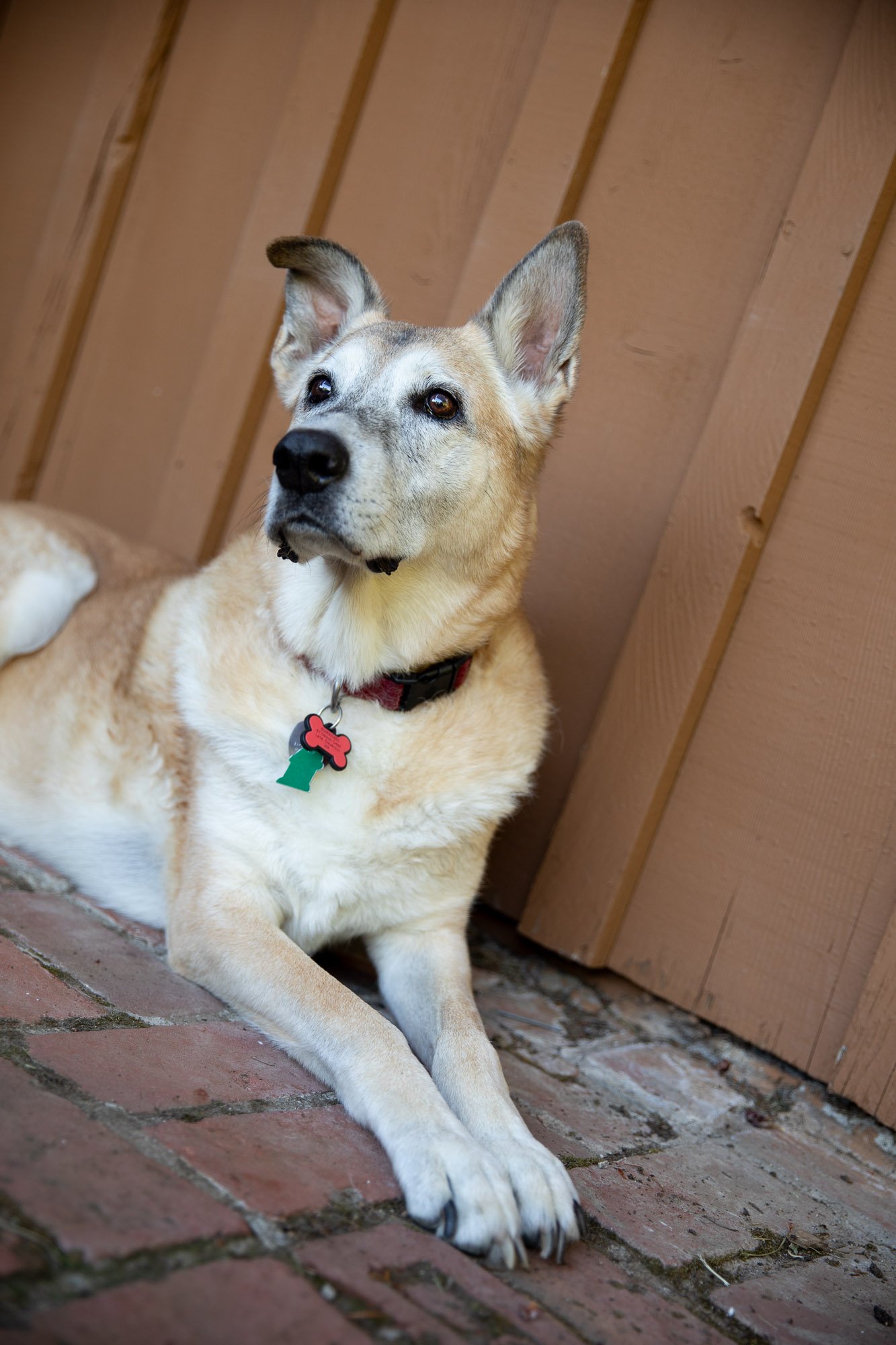
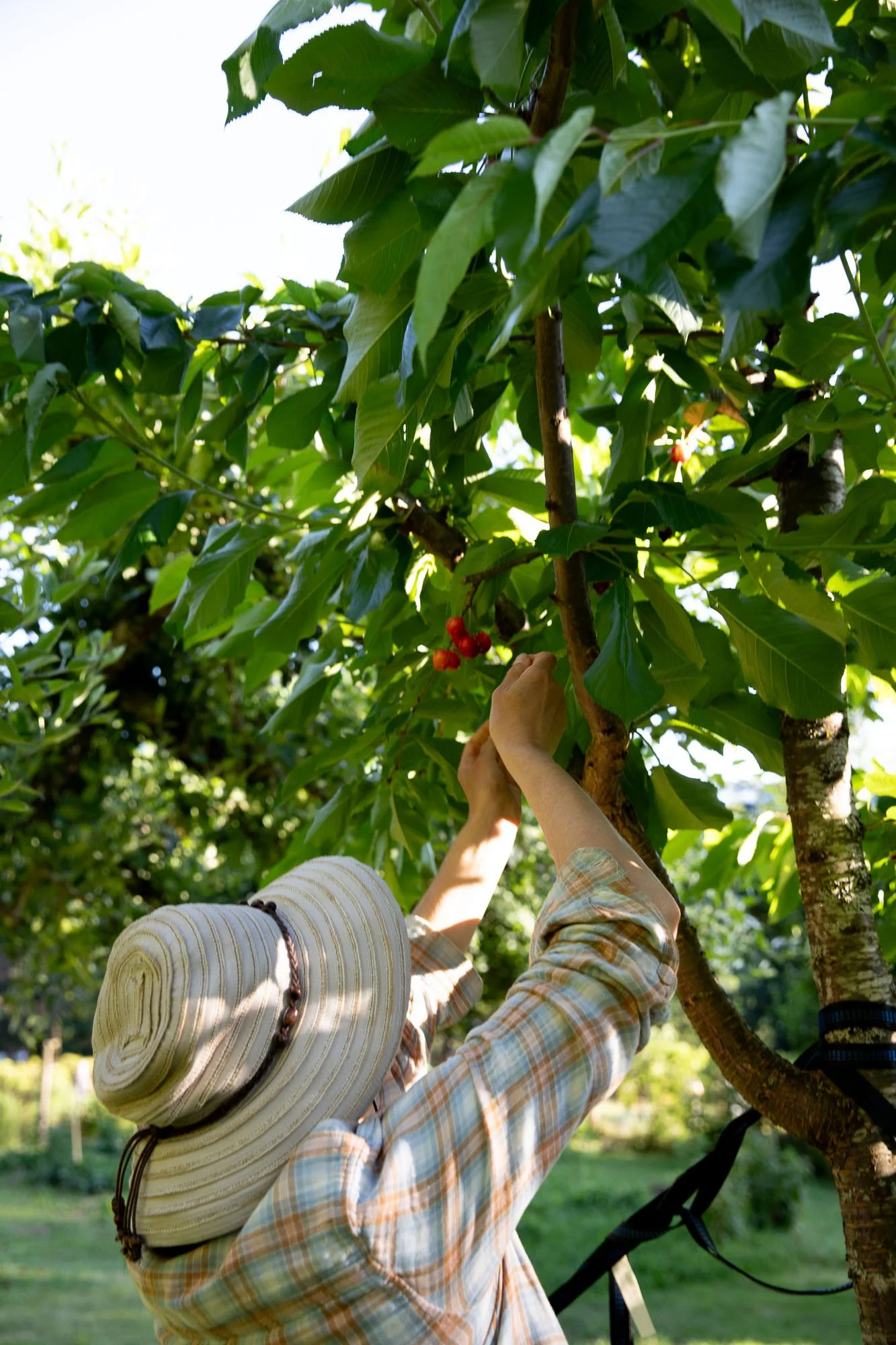
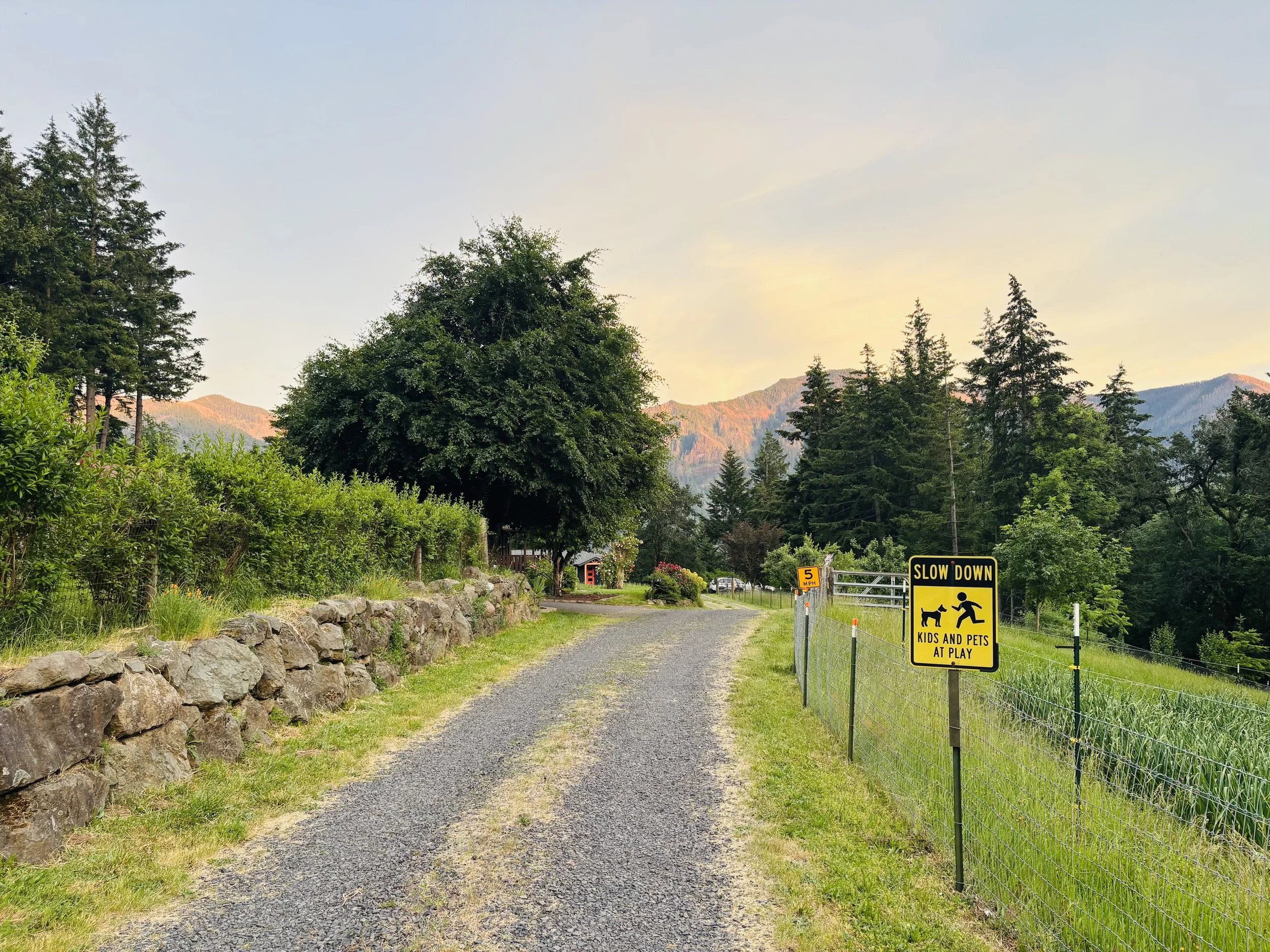
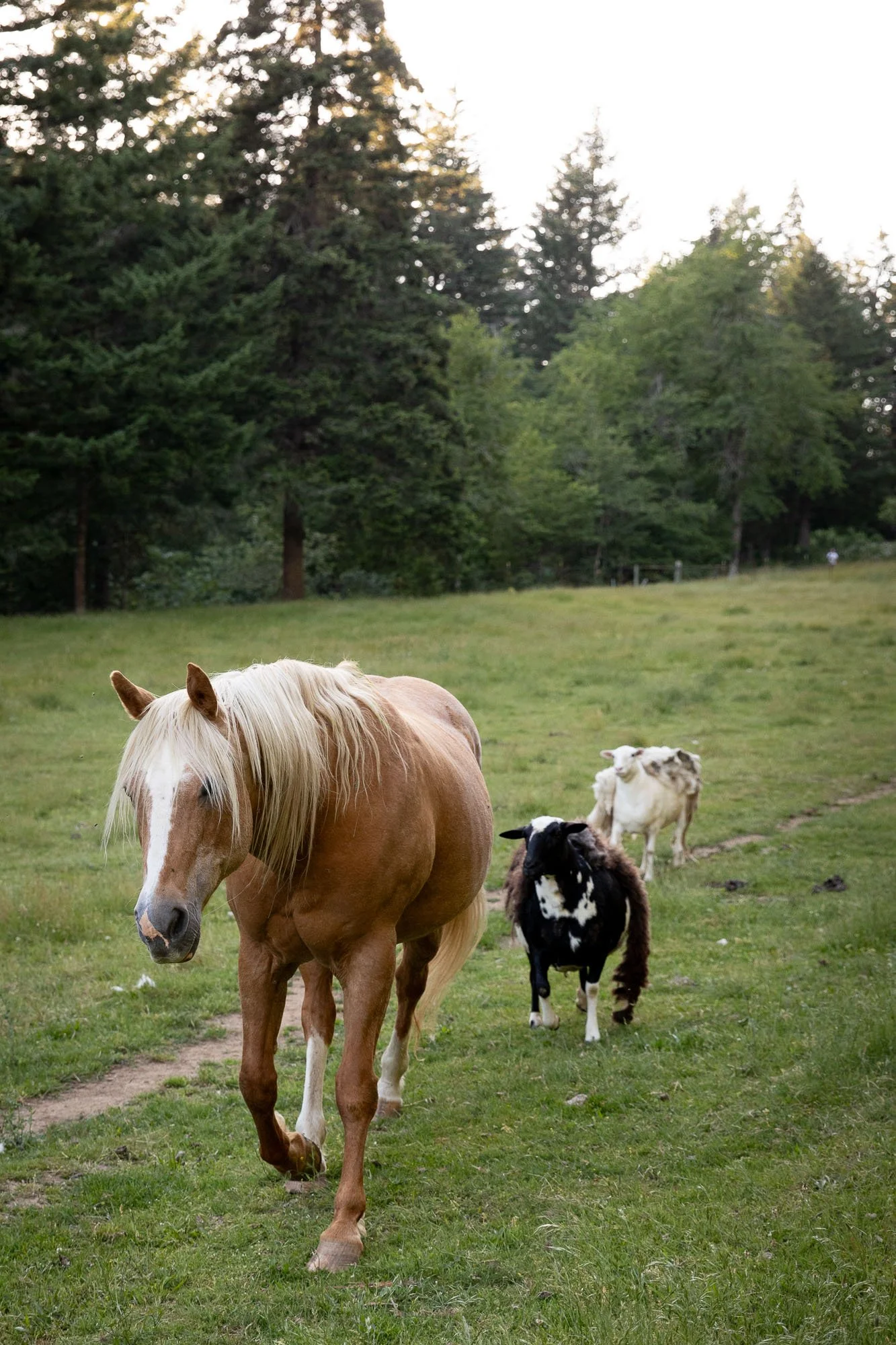
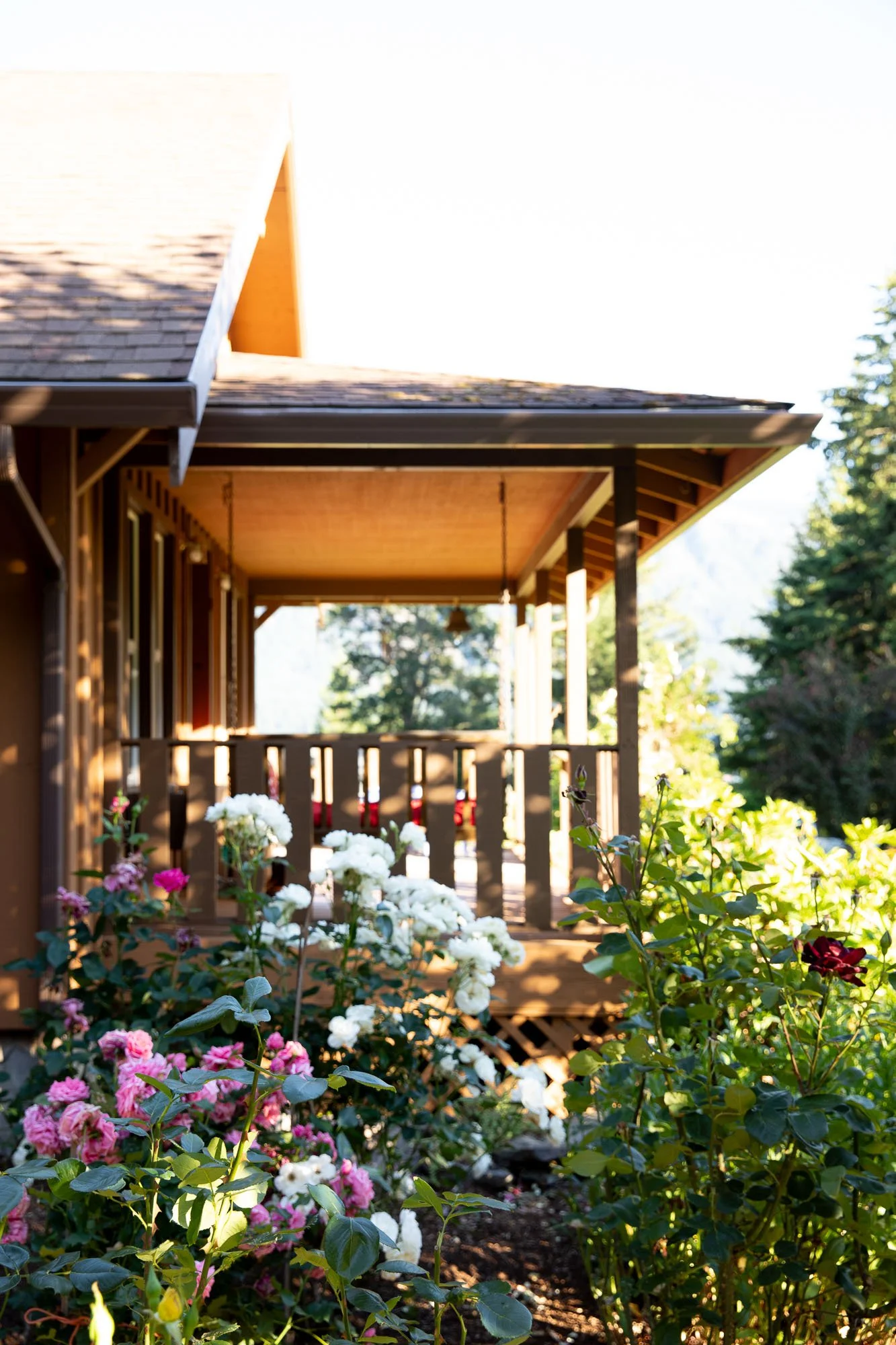
The Lower Meadows are a series of grazing pastures in a sheltered canyon valley above the river. Situated here is the homestead: a cluster of houses, outbuildings, flowers and fruit trees along a gravel lane. Current residents include chickens, sheep, dogs, cats, a horse, and bees.
Across the river the Cascade Mountains frame the place with their steady presence - blue in the morning, ruby at dusk.
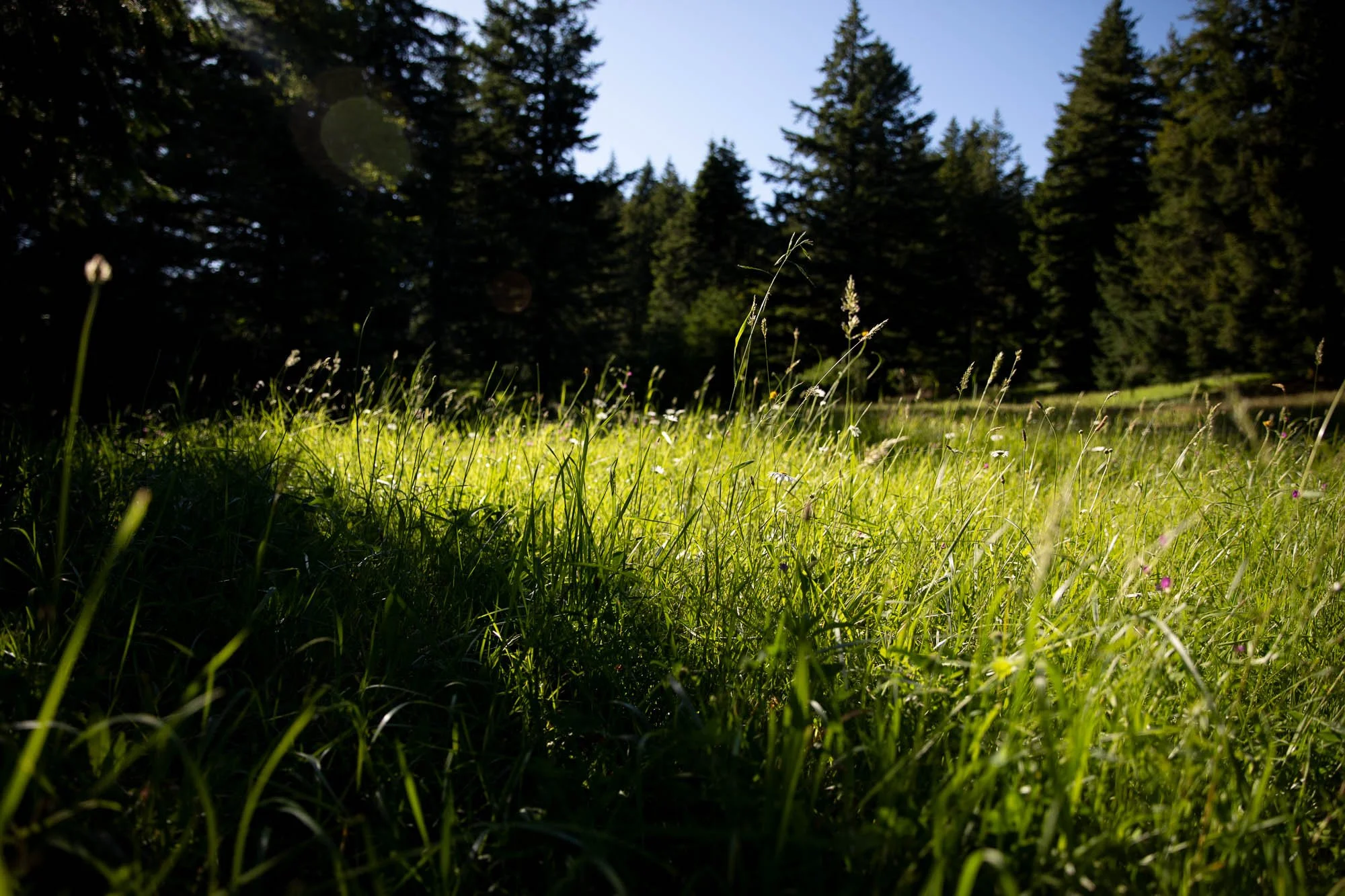
Above the homestead, the wilder landscape of the Upper Meadows is shared with bear, elk, deer, coyotes, raptors, songbirds, and many other creatures.
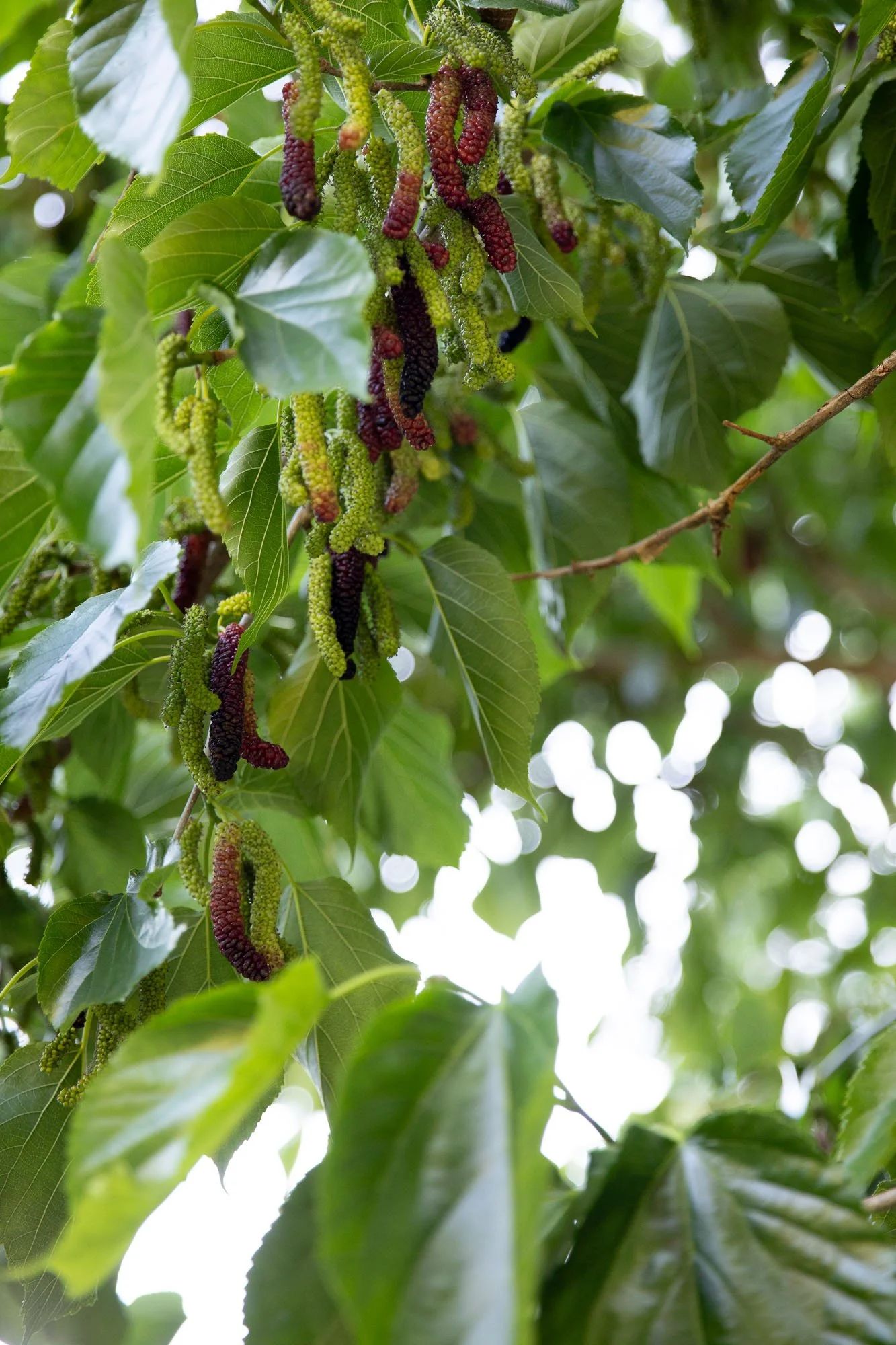
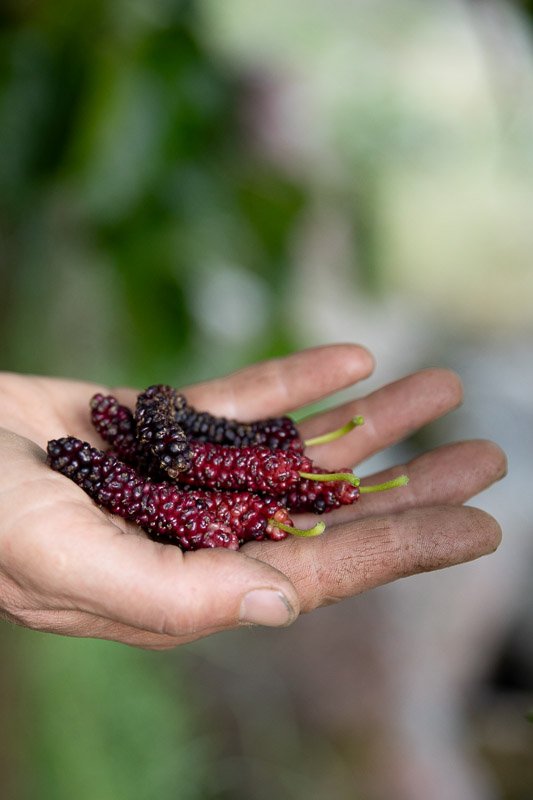
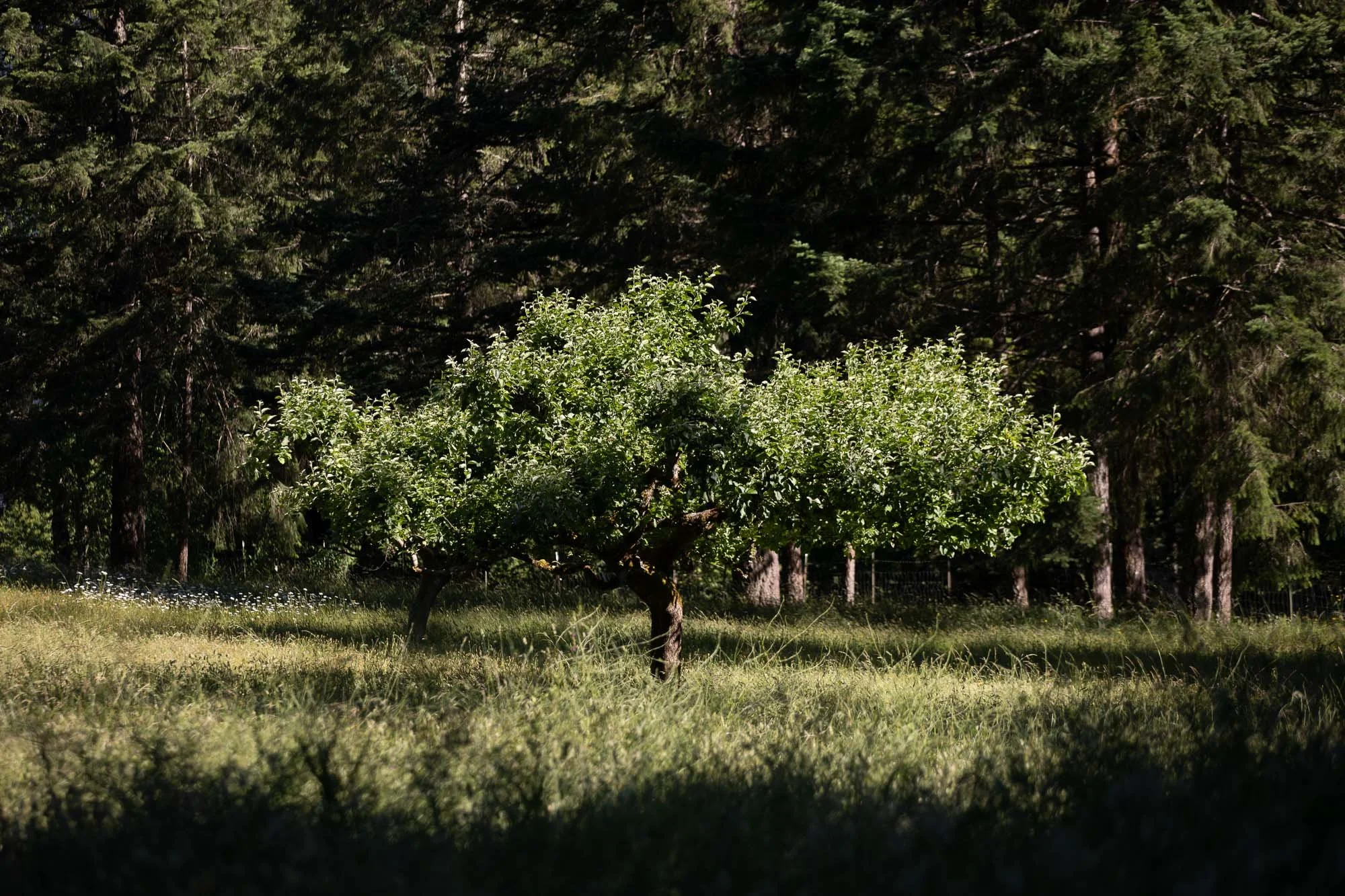
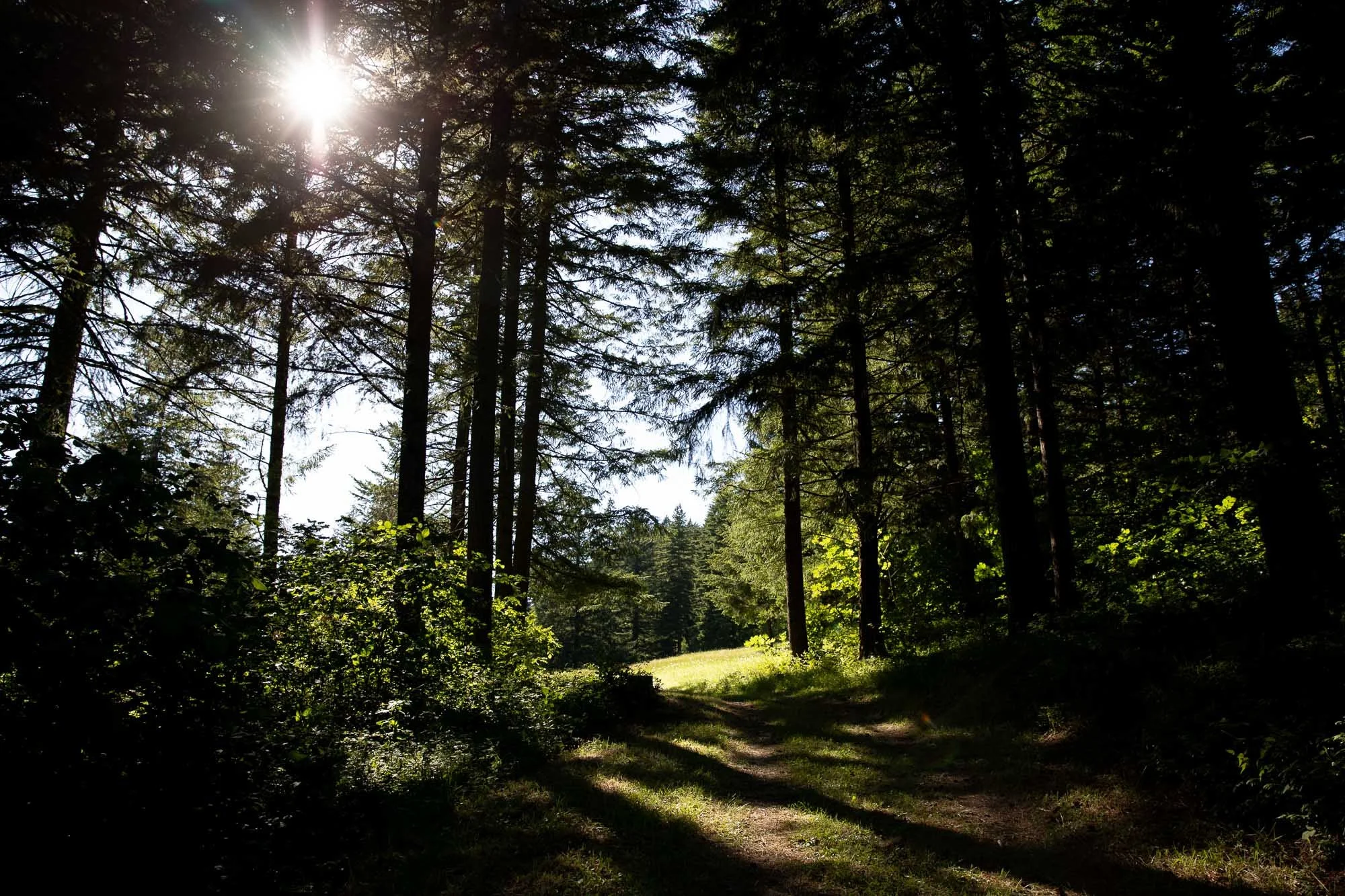
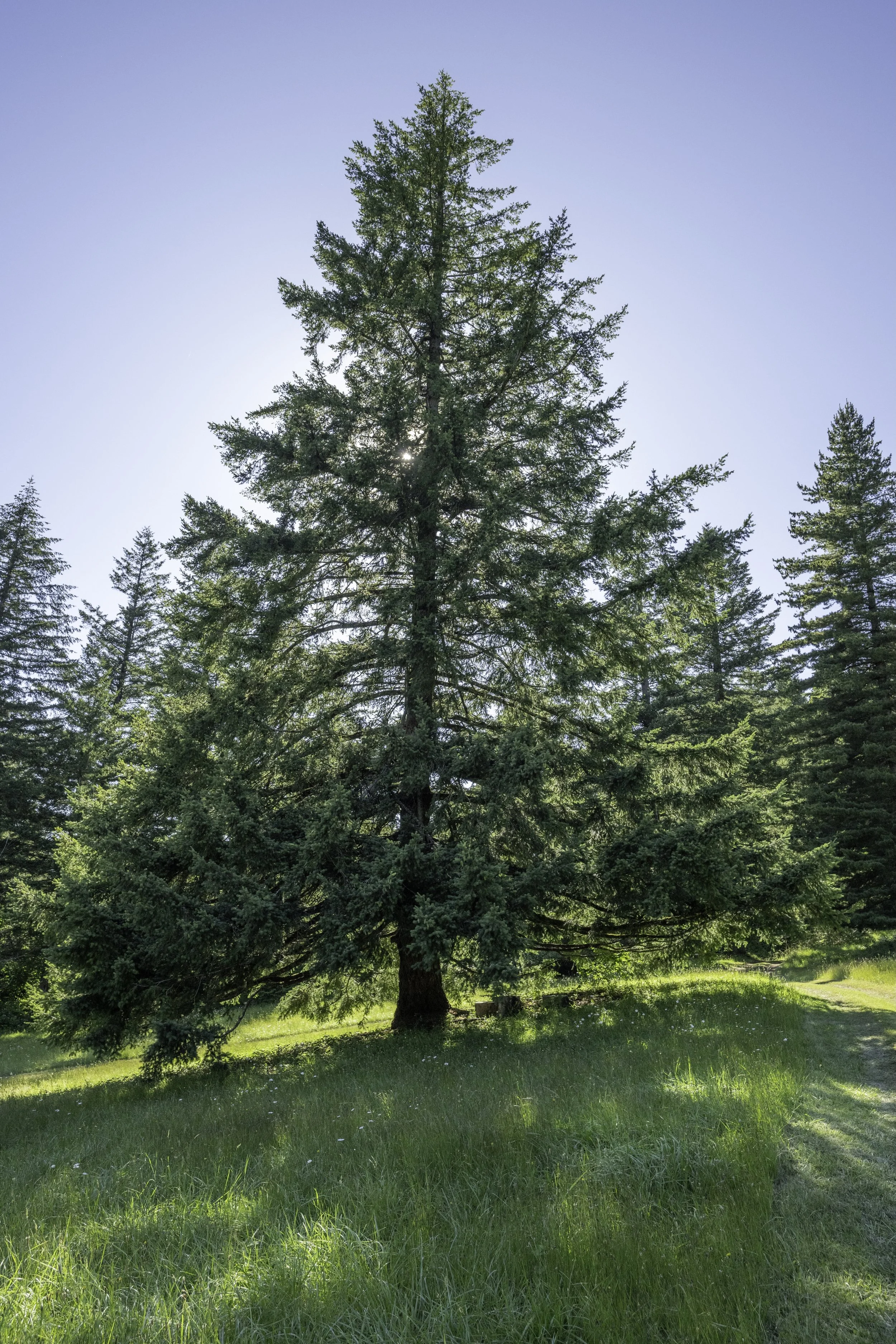
Trails meander through fields and mature Douglas fir groves, opening into vistas where the river glints silver. Sweet peas, small springs, blackberries and old fruit trees from homesteads past can be found.
The wildlife seem to know they're welcome here and make full use of the food, shelter, and relative safety the land provides.
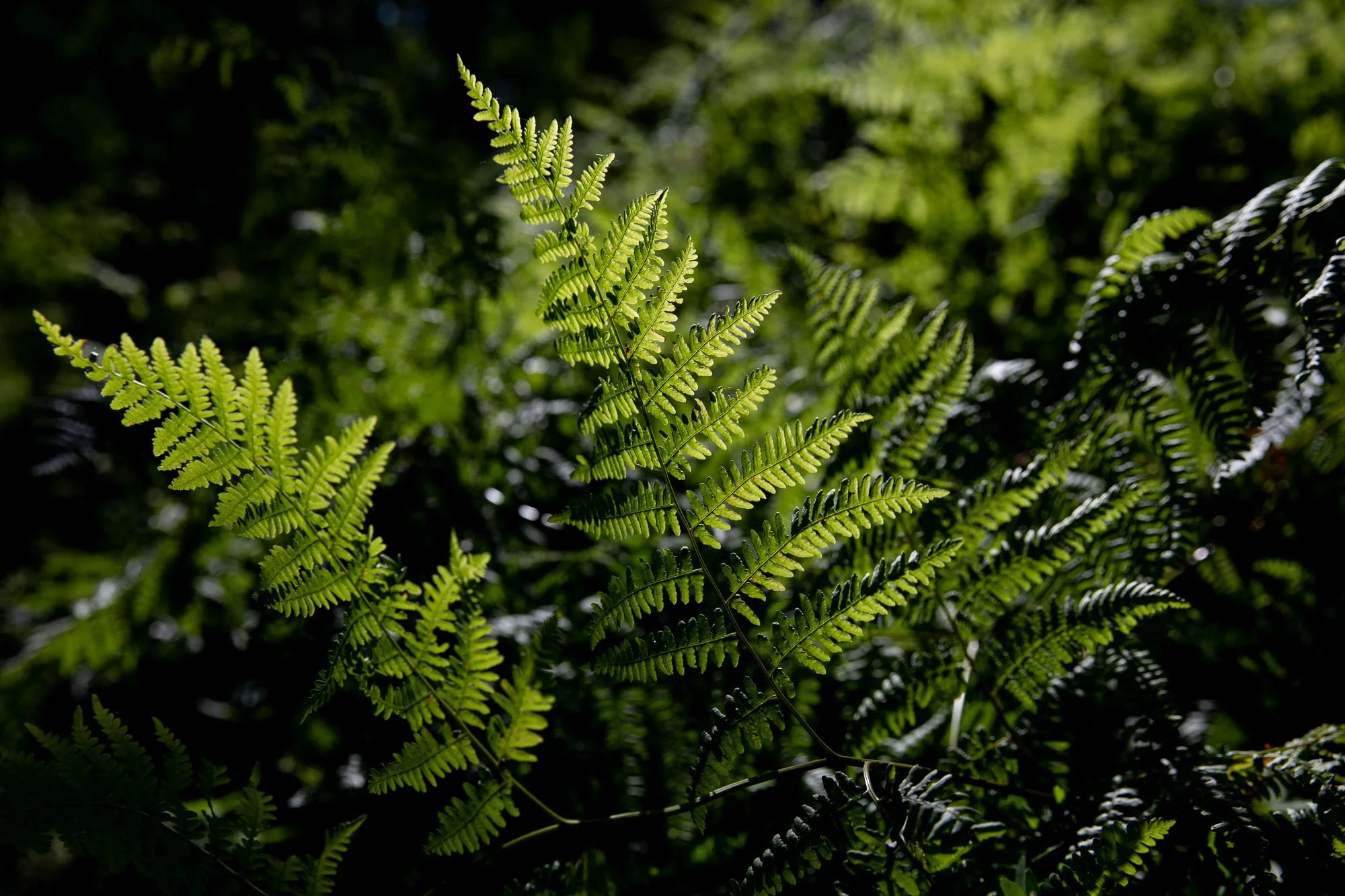
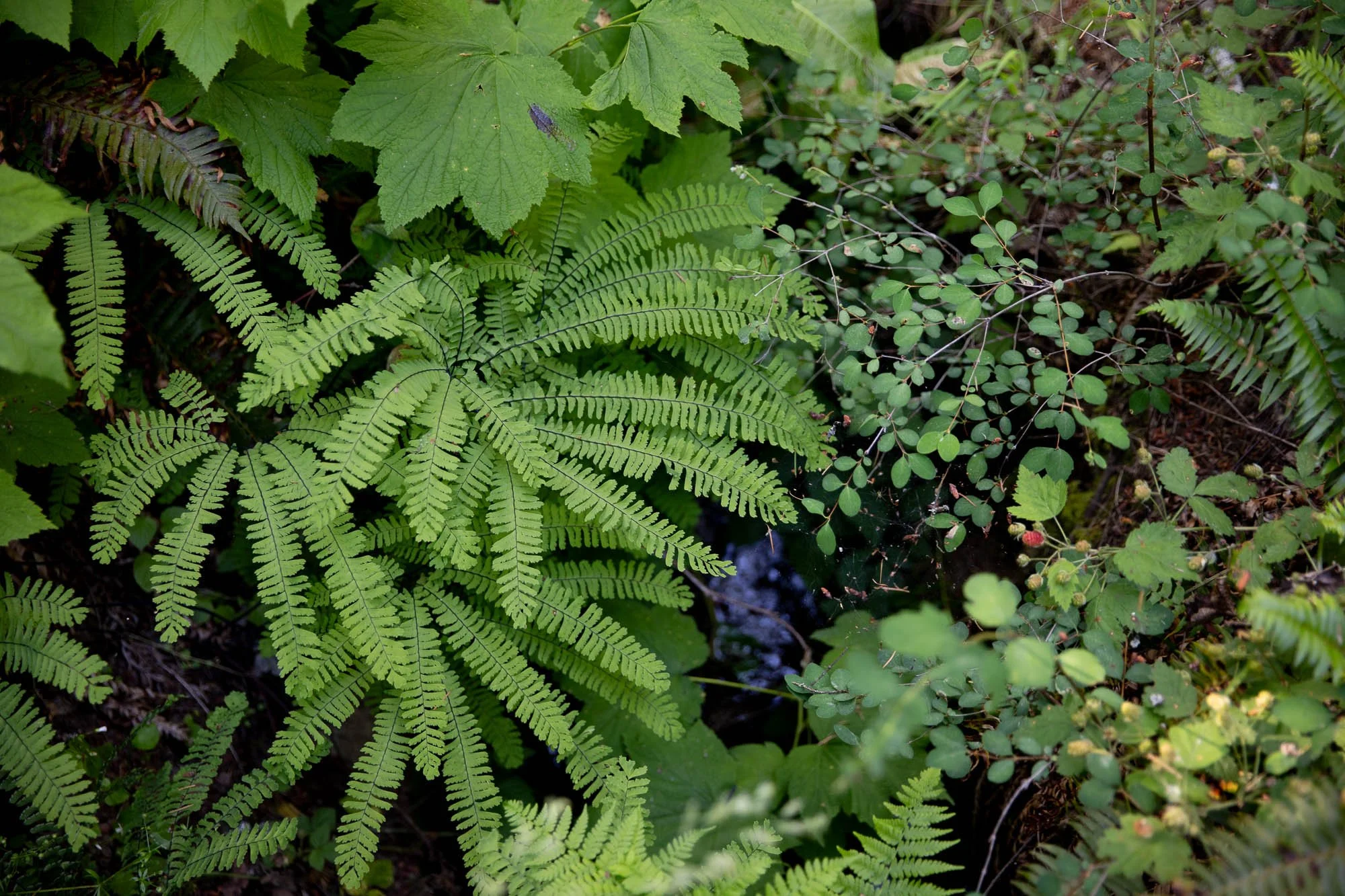
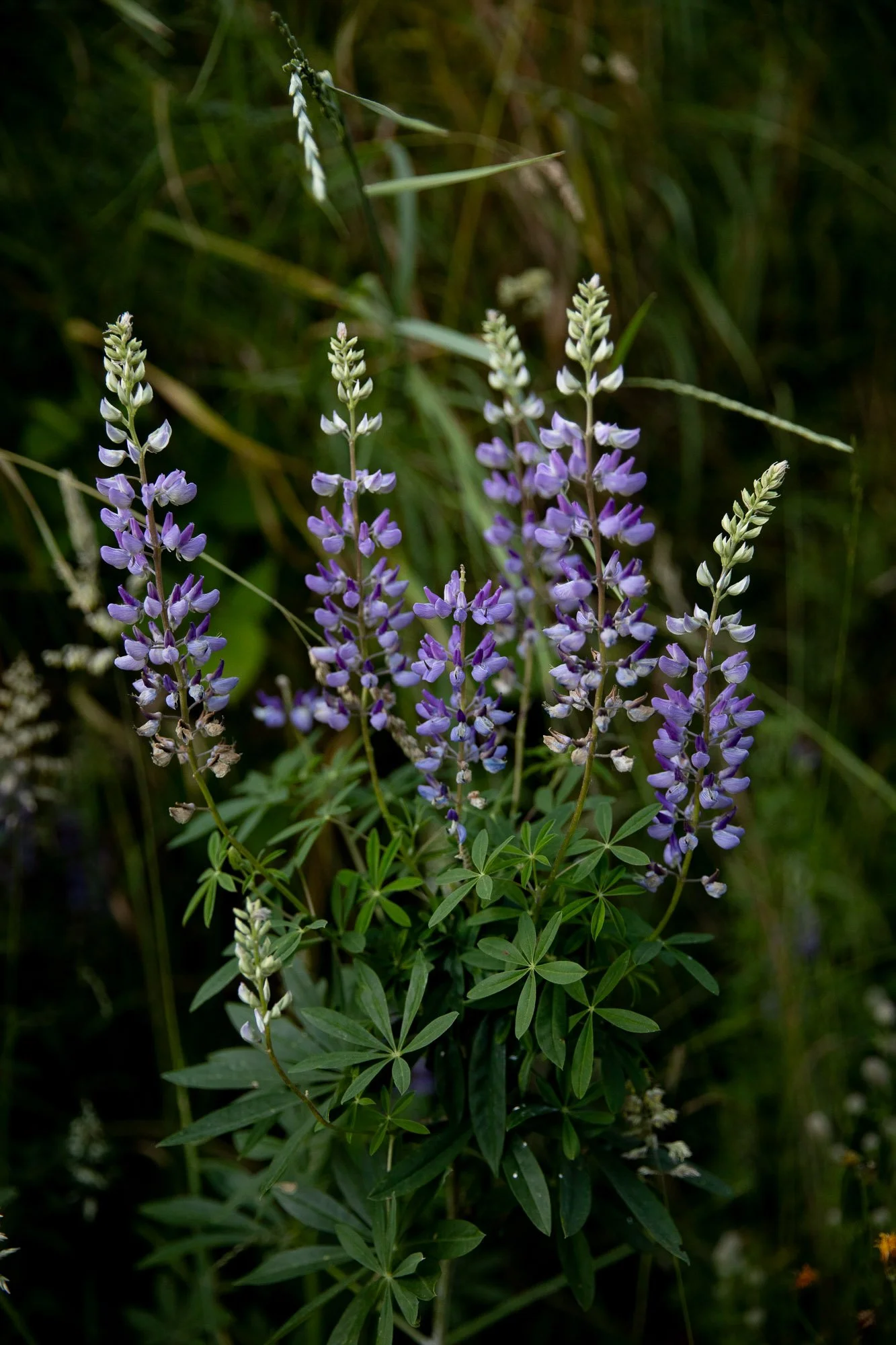
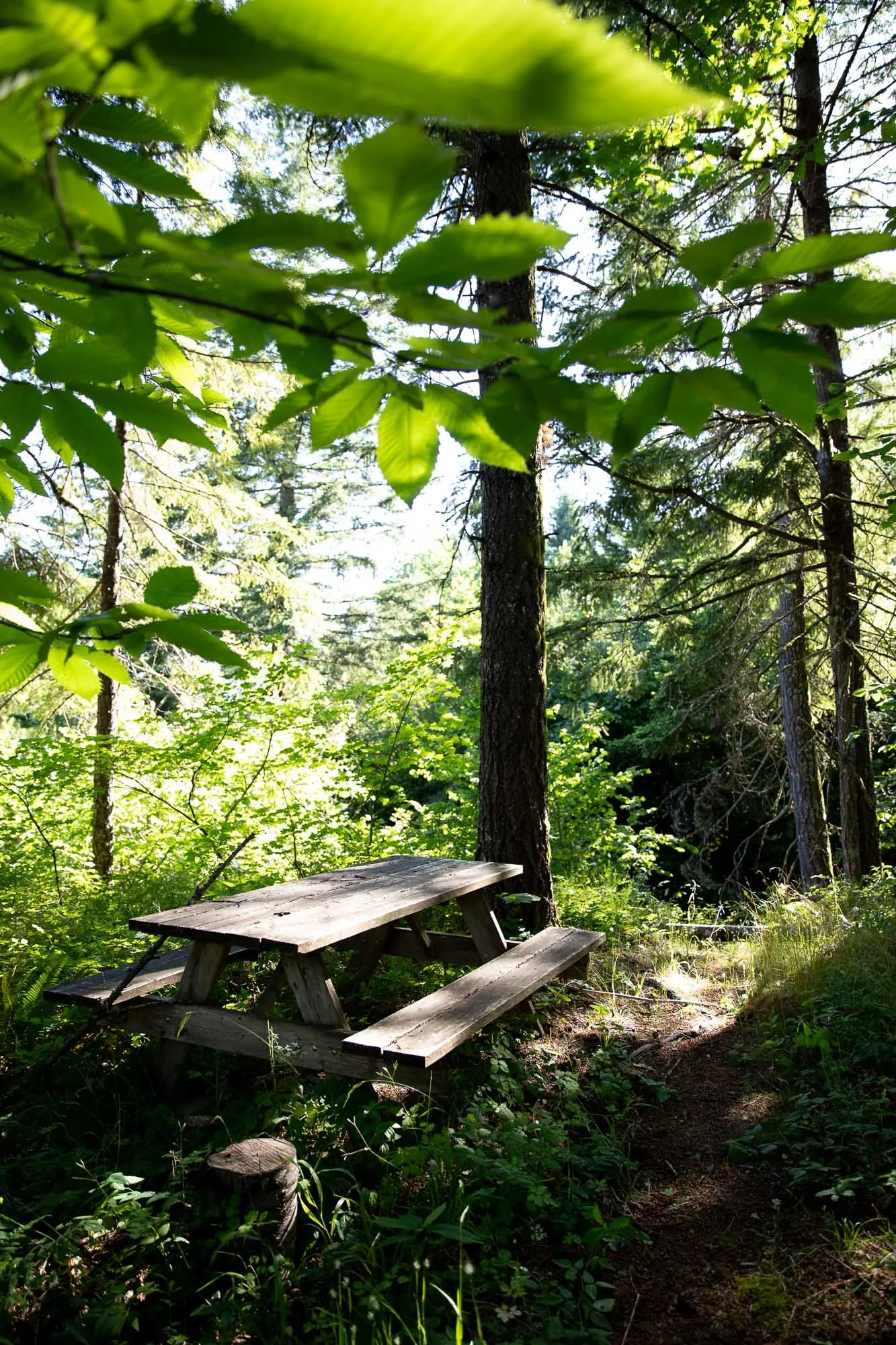
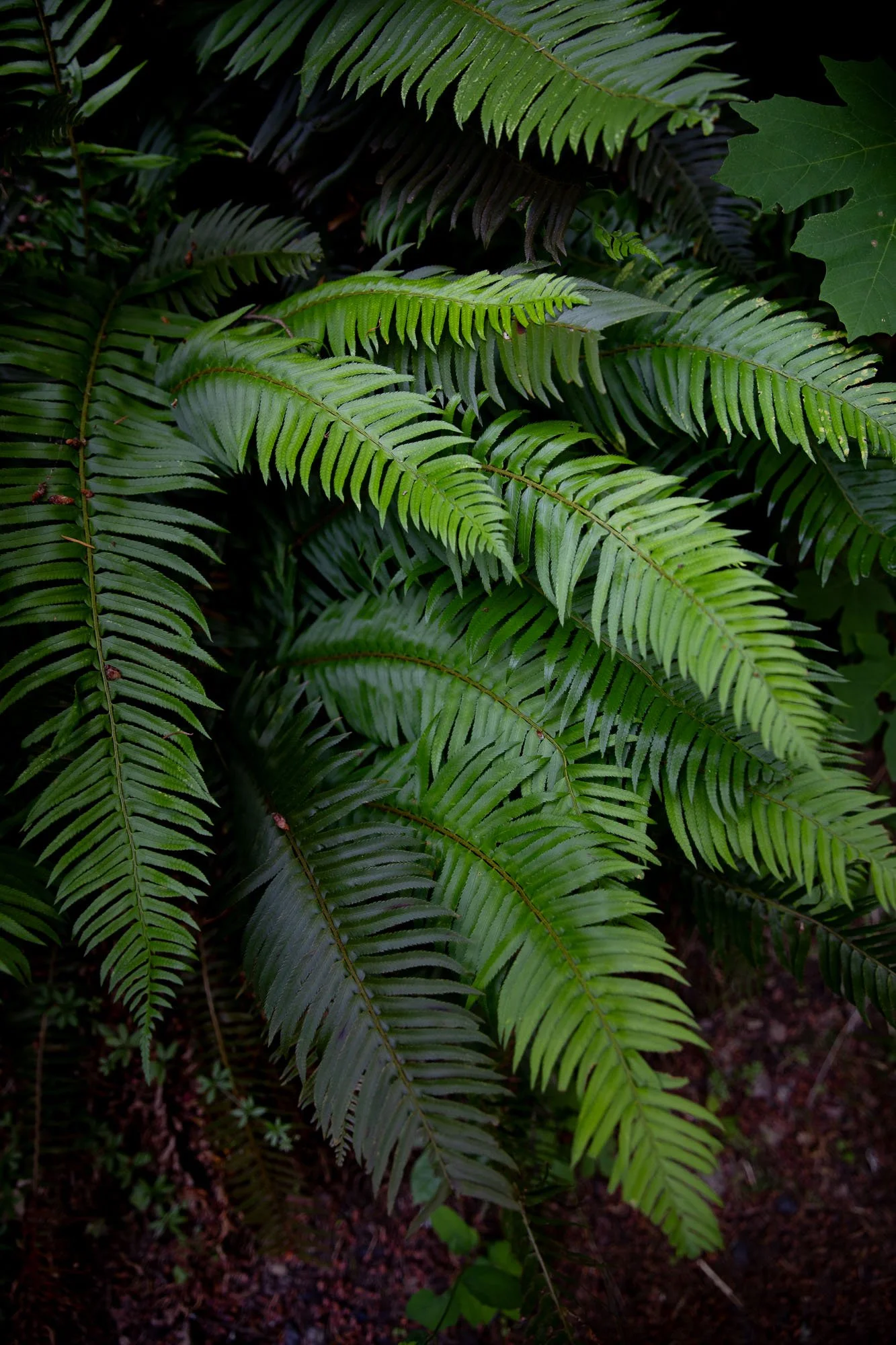
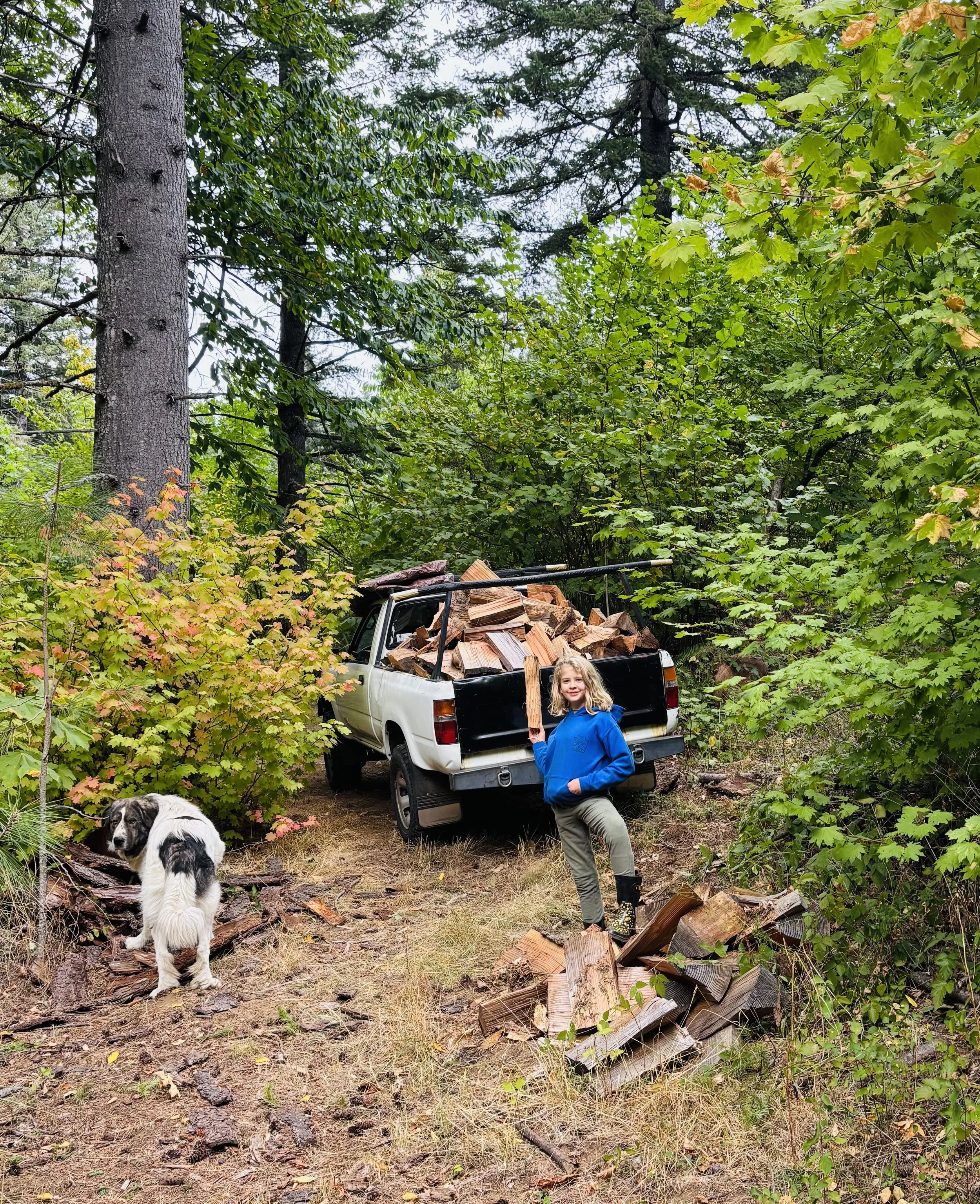
Where humans and the wild meet, rural life unfolds.
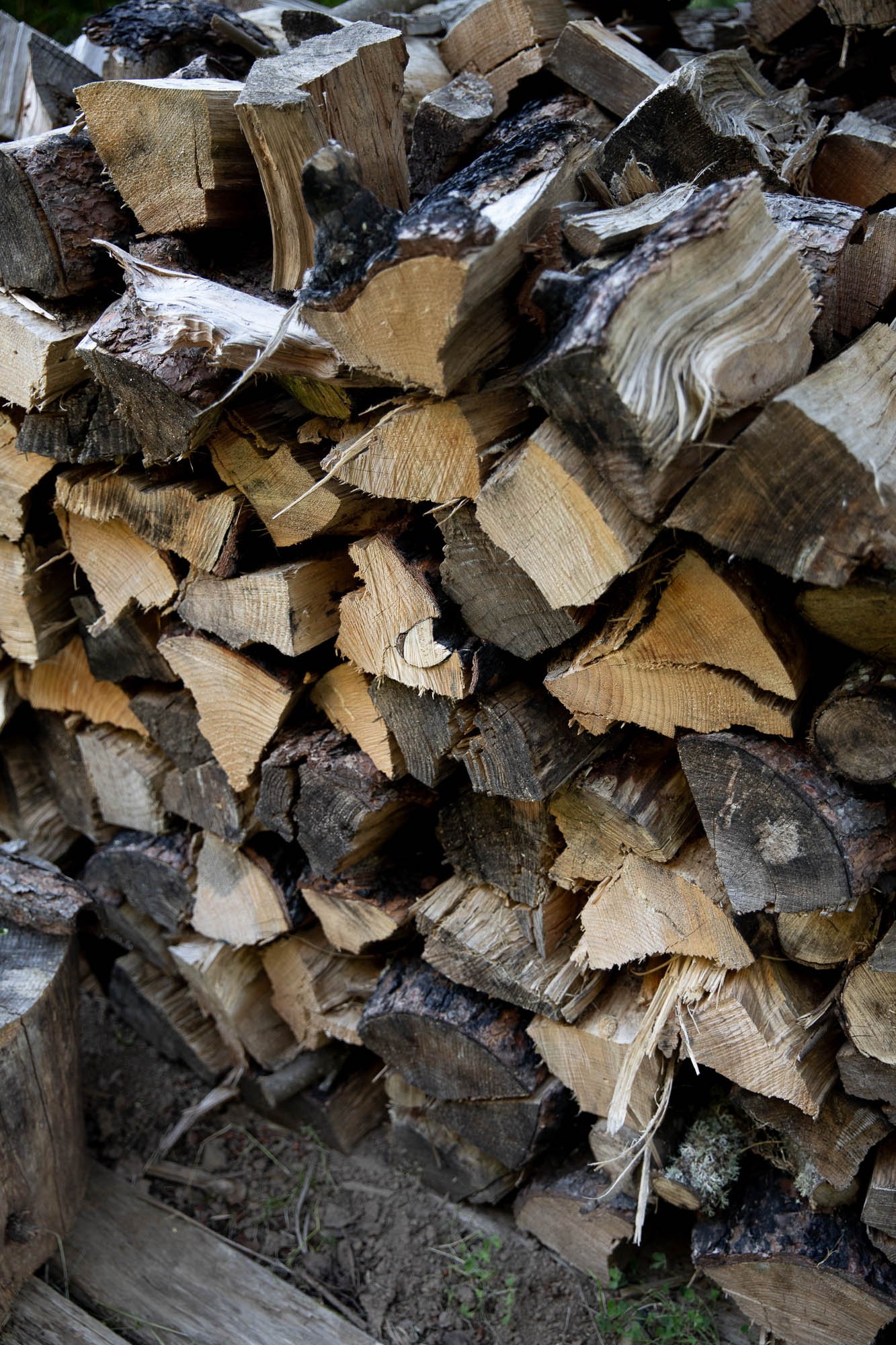
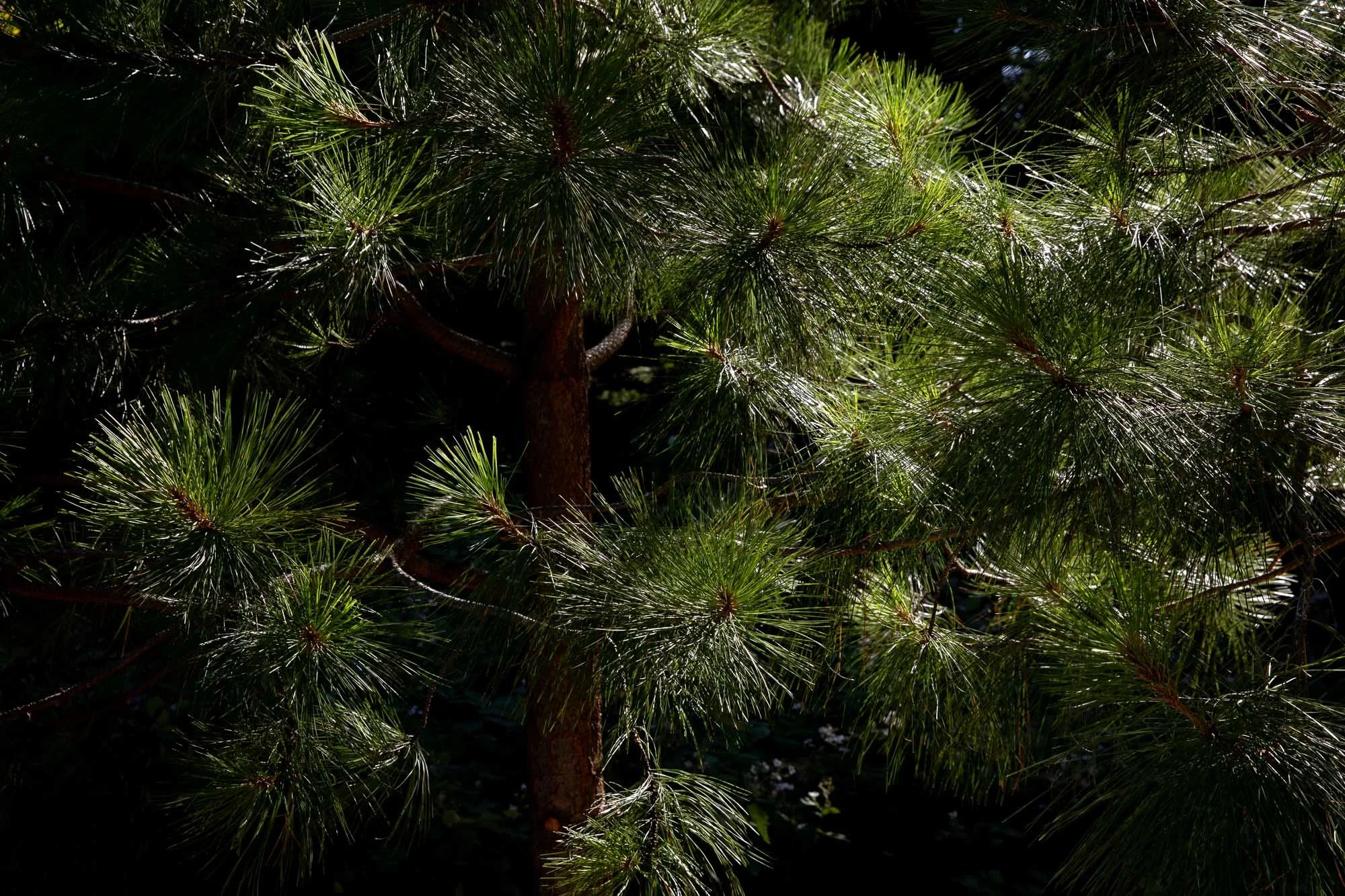
Trees are planted and pruned, invasive species removed, fuels reduced, roads repaired, trails cleared, cisterns mended, and countless small tasks tended season after season.
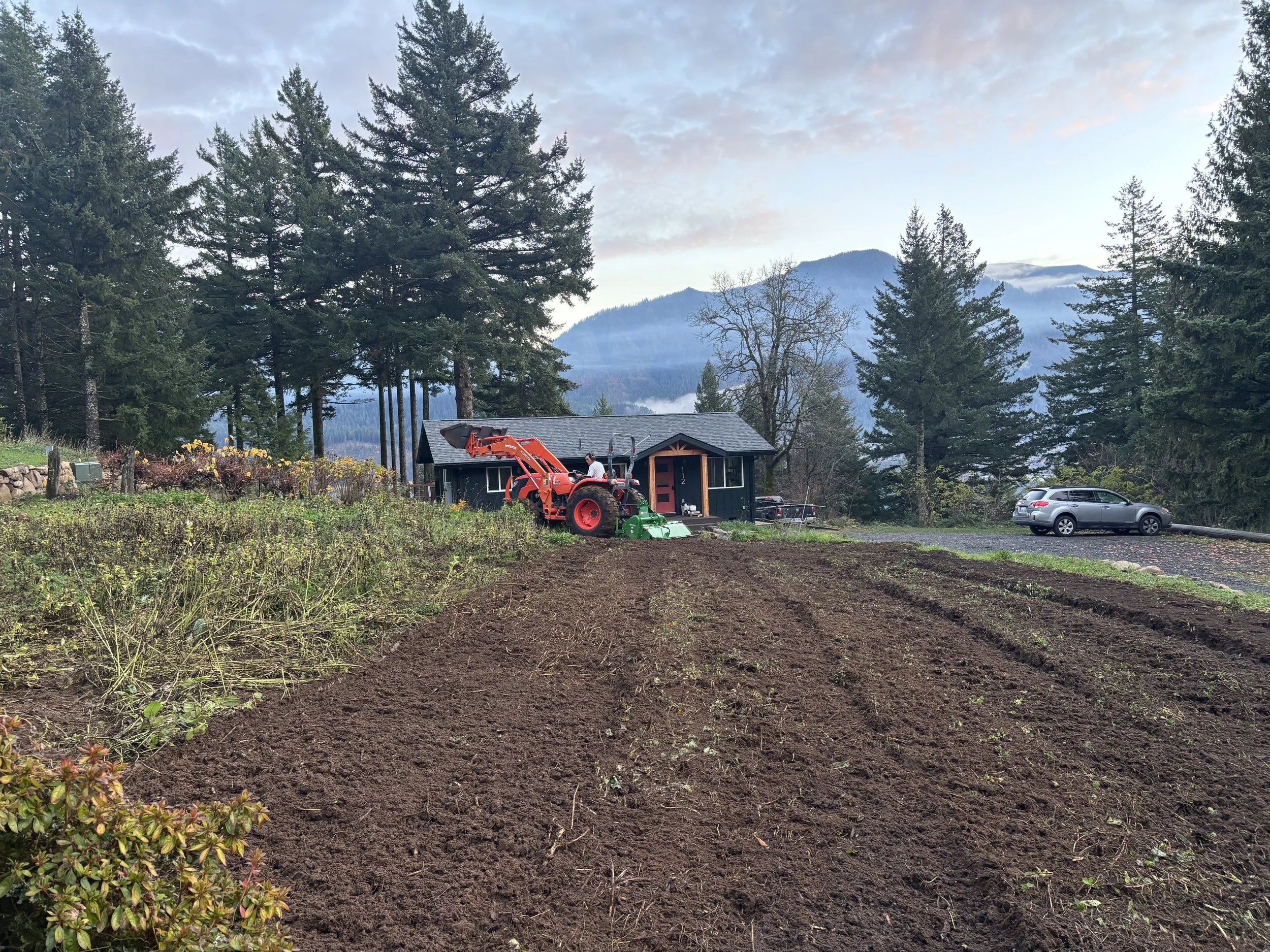
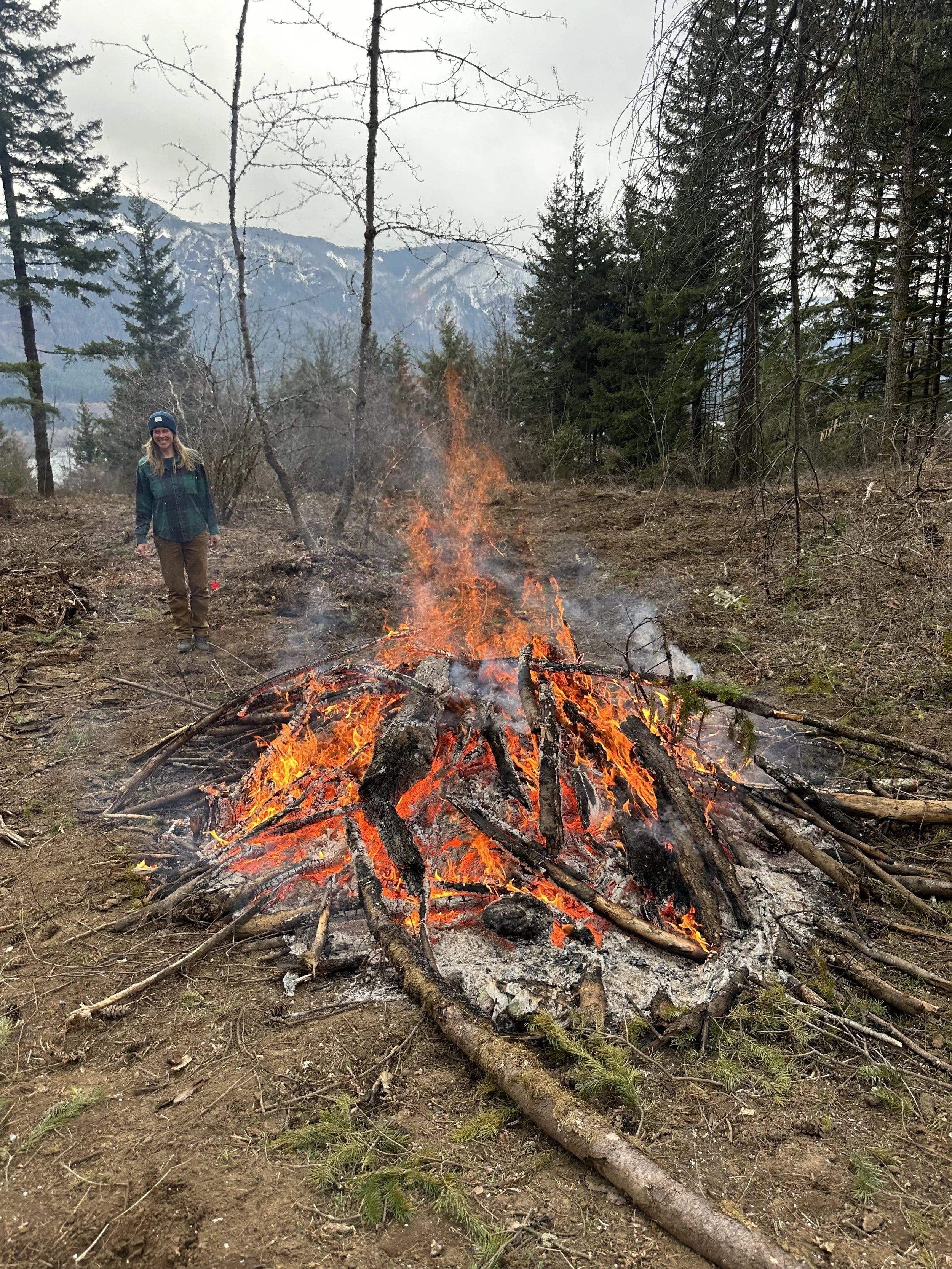
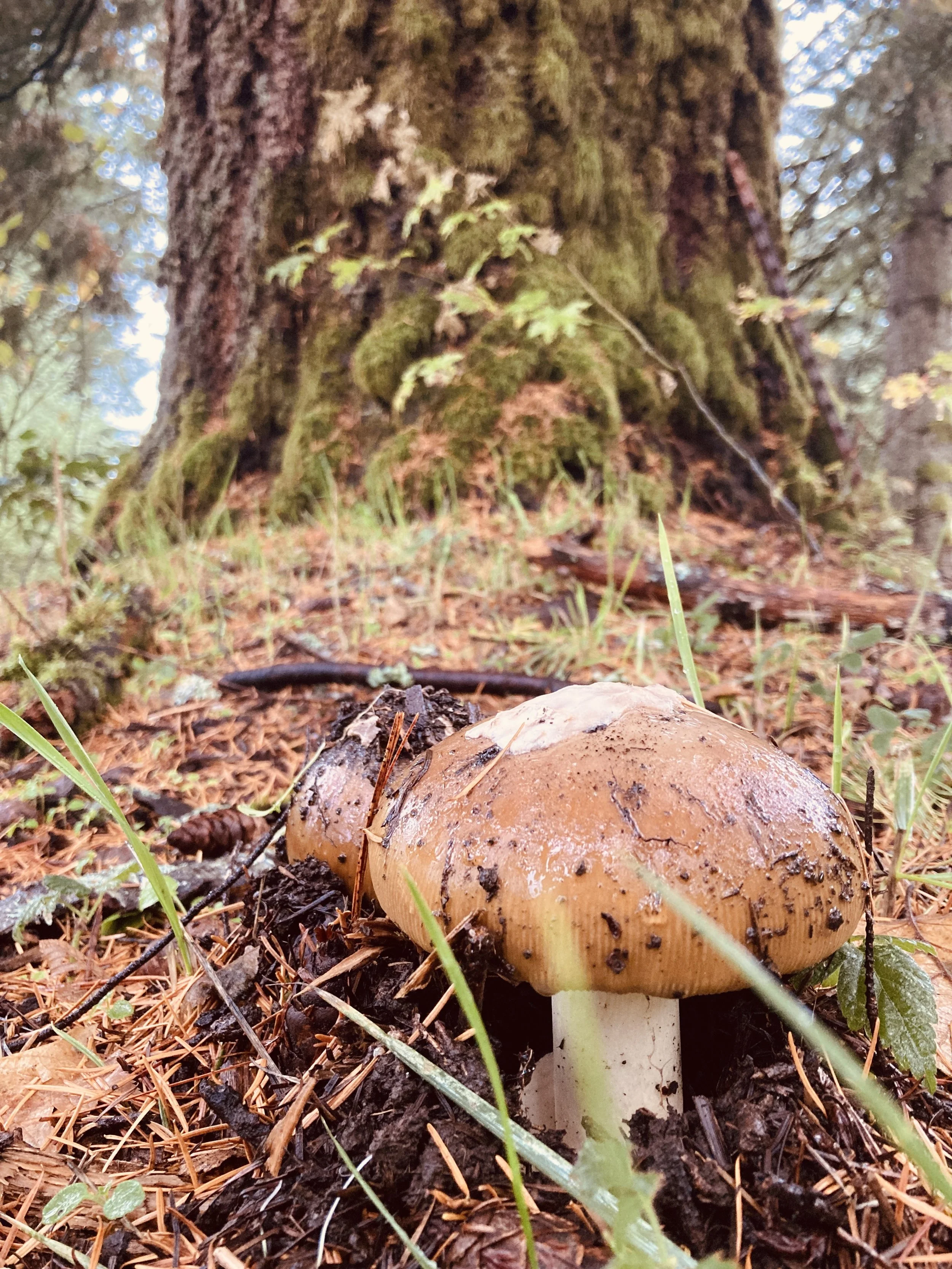
Meanwhile, fawns are born. Coyote pups strew the ground with bones. Moss thickens on old branches while blossoms become fruit. Fresh leaves unfurl, then color and drift. Mushrooms burst from damp earth.
Neither the work nor the magic are ever finished.
The People
Long before our family came, these protected canyon benches were rich ancient forests, easily reached from the Columbia River fishing grounds and filled with foods and materials. They were stewarded since time immemorial by Upper Chinookan peoples, including the Watlala.
With European settlement in the nineteenth century came diseases that took a catastrophic toll, emptying nearby villages. The massive trees were logged intensively over the following decades, and a series of homesteads emerged among the stumps.
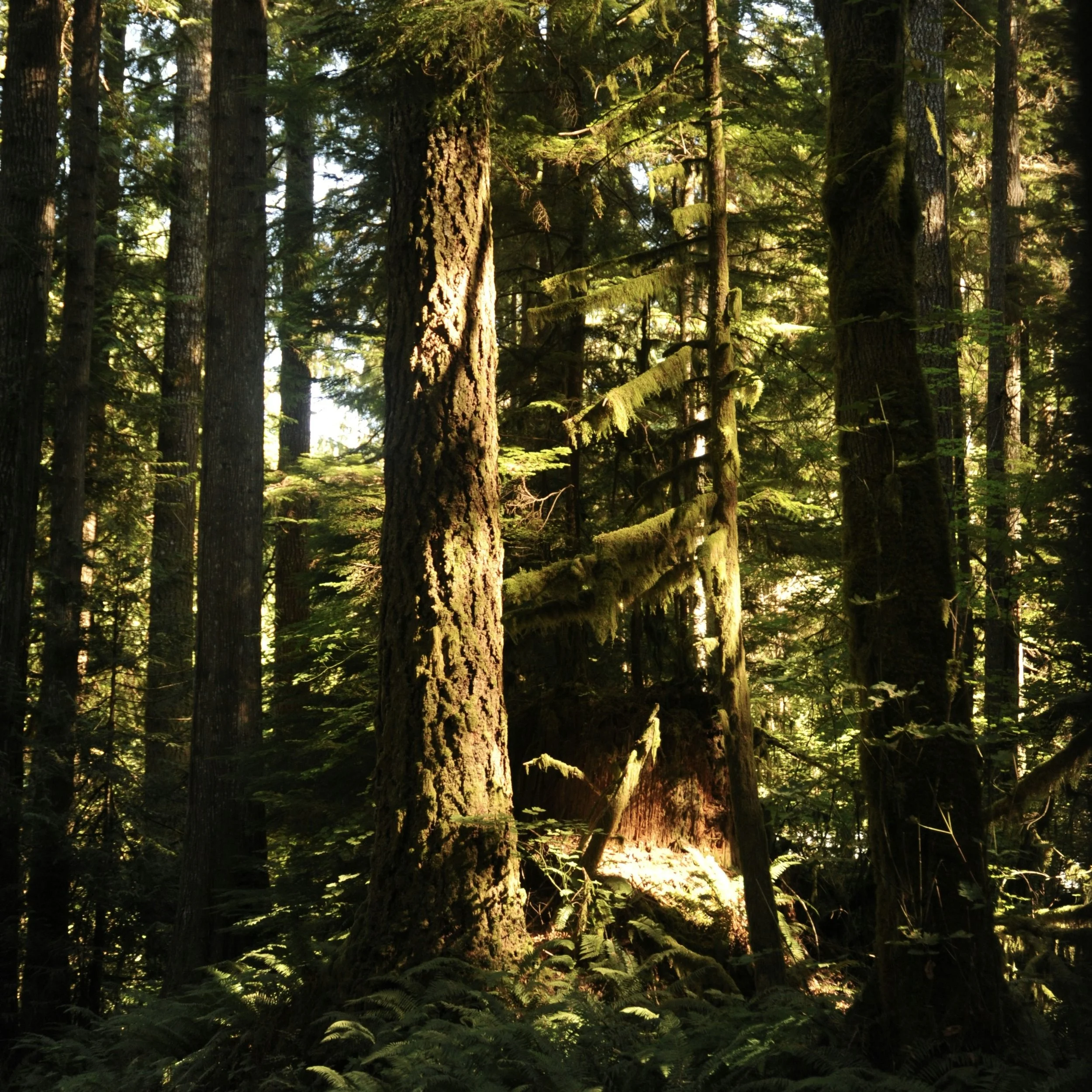
By the time my family took up residence here, younger forests had reclaimed the slopes. The previous homestead was abandoned, its meadows choked and brambled. The farmhouse was slowly sinking into the earth and inhabited by goats. My parents moved into its questionable shelter anyway and began the long process of restoring and renewing the place, raising a family as they went.
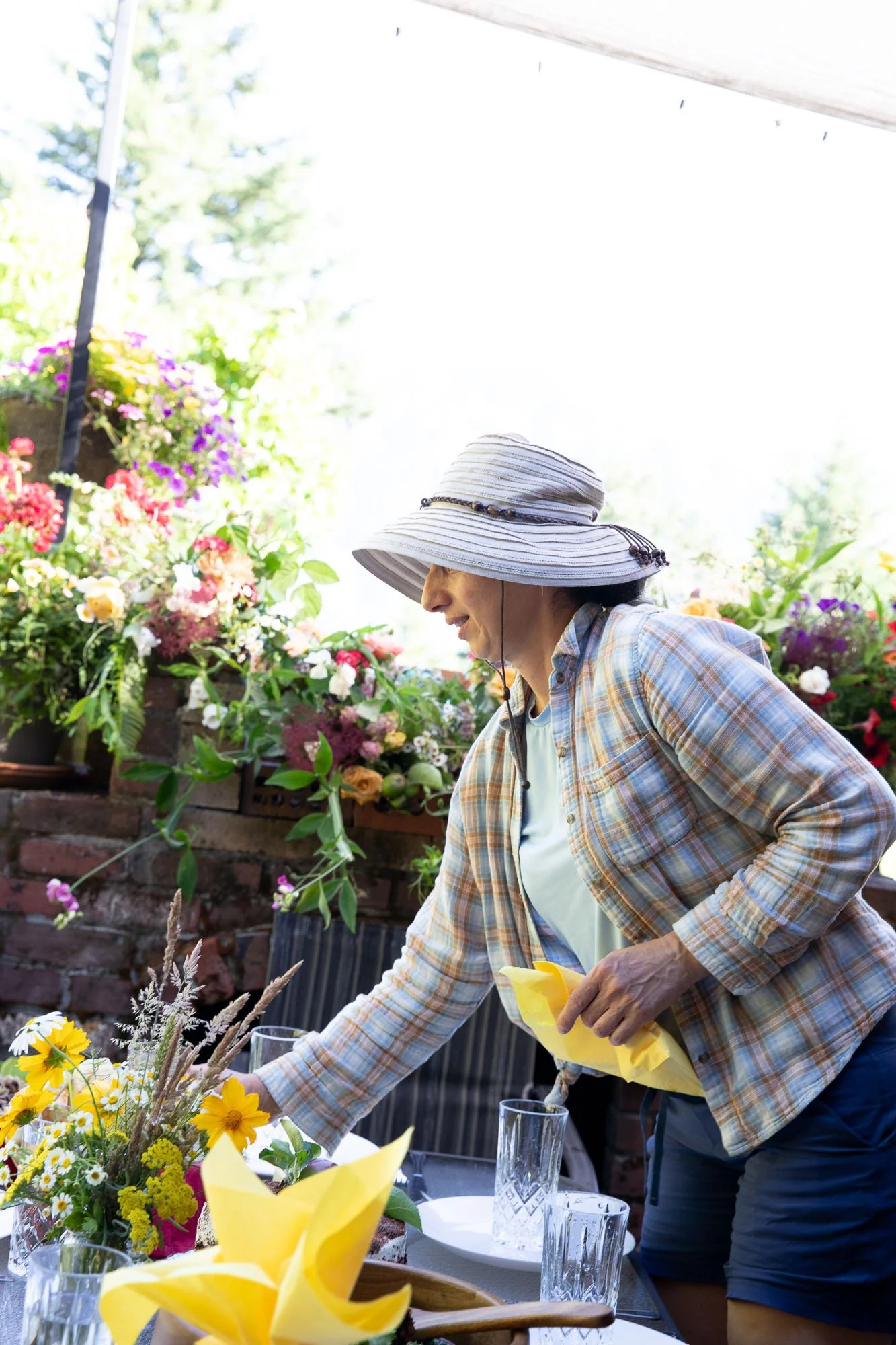
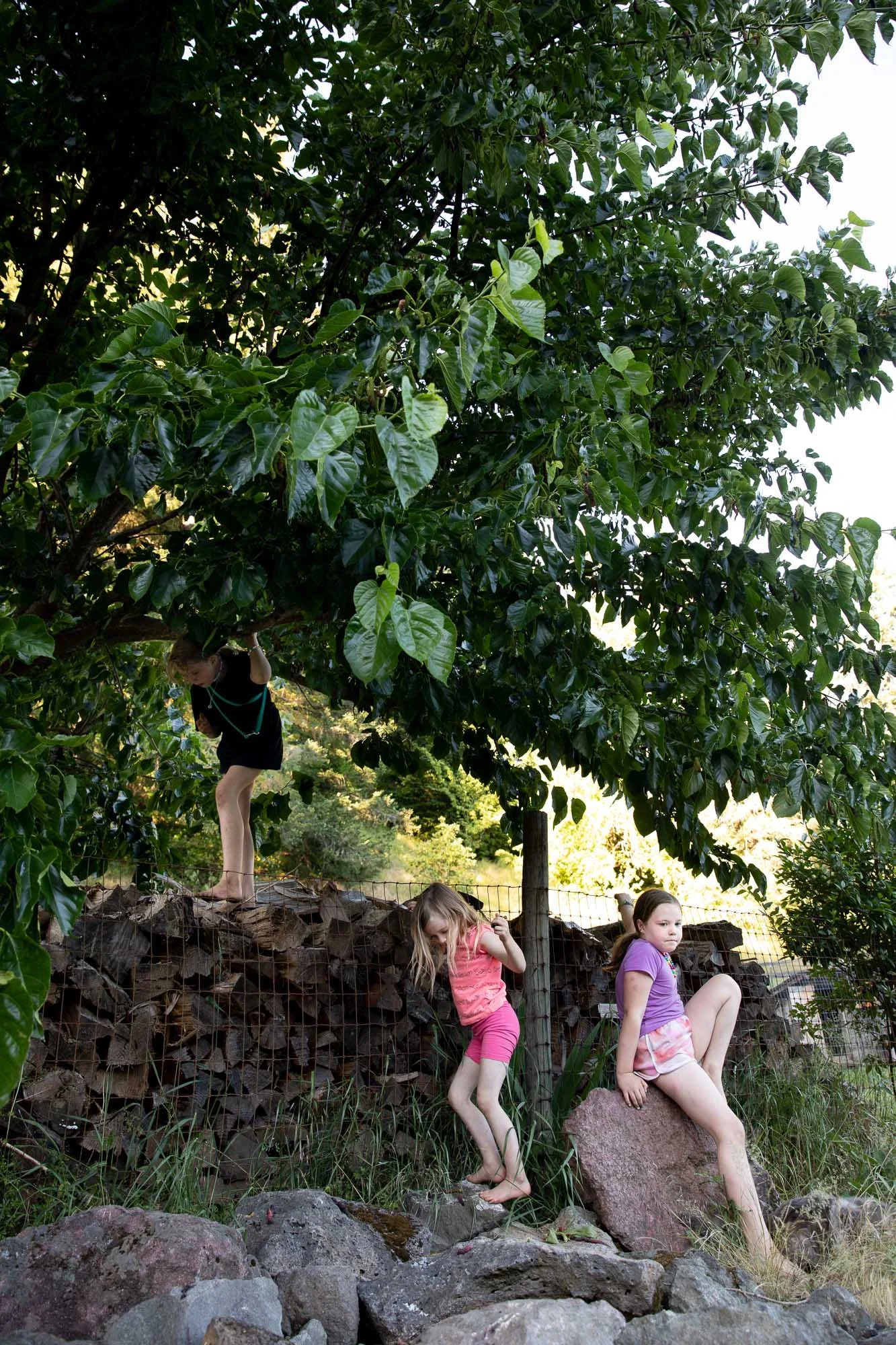
Grandparents, aunts, uncles, cousins, friends, and neighbors joined in. Together they improved the house, built barns, raised animals, planted thousands of trees, repaired water systems, grew food and flowers, and welcomed people and creatures who turned up along the way.
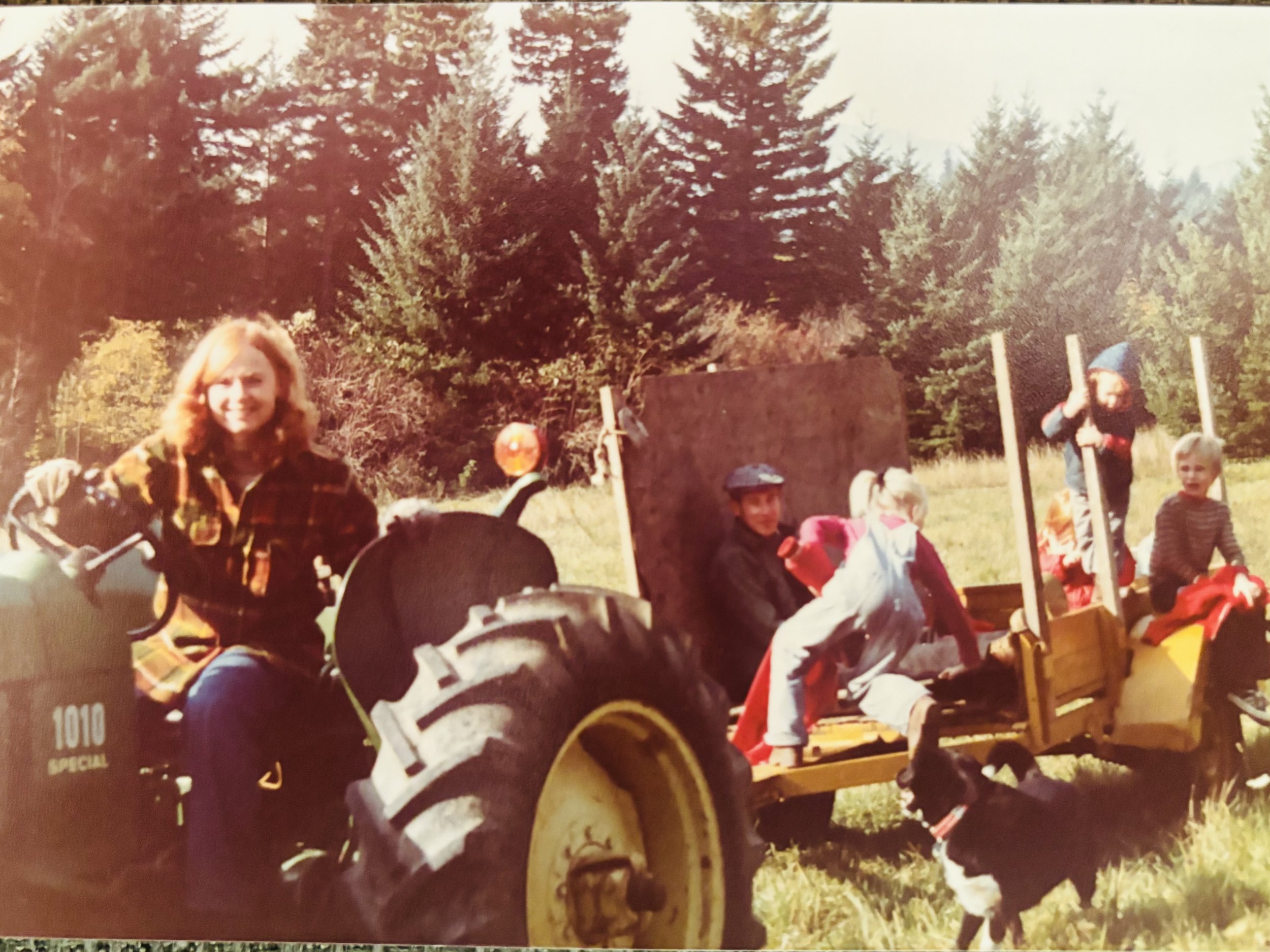
Today this continues, though many of the characters have gone on to other chapters. My dad remains the primary throughline and vision keeper, working with resident family members to attend to the evolving needs of the place. Friends new and old help, and sometimes stay for a season or years. In the summers, a new generation of cousins returns to the land.
As our family changes, our love for this place continues. We hope to care for it well during our time here, so that the land and structures entrusted to us continue to offer a sense of home, refuge, nourishment and connection for generations to come.
“Where there is ruin, there is hope for a treasure.”
— Rumi